
NewsDetails
Chamber Filter Press vs Plate and Frame Filter Press: How to Choose the Right Design
author:grh time:2026-10-07 11:09:20 Click:81
Choosing between a chamber filter press and a plate and frame filter press is the first decision in any dewatering project, and it is usually made on habit rather than on data. Here is the engineering comparison that actually determines total cost.
The Structural Difference in One Paragraph
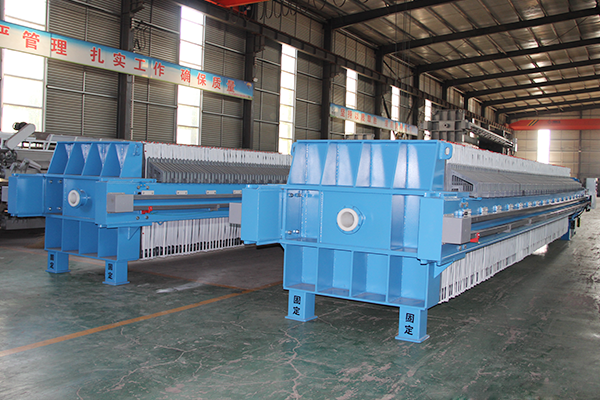
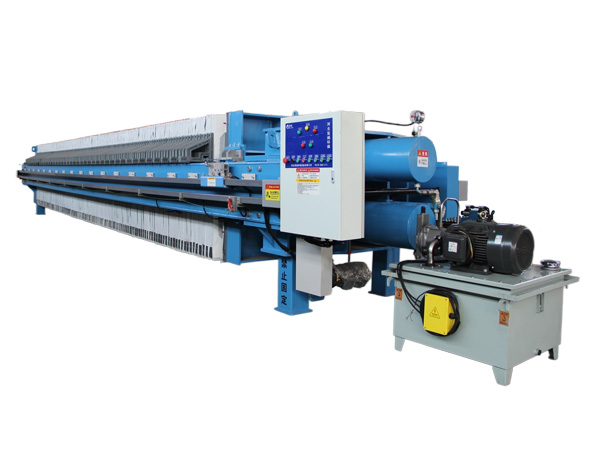
A chamber (recessed plate) filter press uses a single repeated plate with a recess on each face, so two adjacent plates form one closed chamber. A plate and frame filter press alternates a flat plate with a hollow frame; the cake forms inside the frame, and the plate only provides the filtering surface. That one difference drives everything else — sealing area, cake thickness flexibility, cloth format and cleaning effort.
Head-to-Head Comparison
| Criterion | Chamber filter press | Plate and frame filter press |
|---|---|---|
| Cake thickness | Fixed by plate recess, typically 30–40 mm | Changeable by swapping the frame depth |
| Filter cloth | Two sleeves per plate, joined by a neck | Flat sheets hung over each plate |
| Cloth change time | Longer — sleeves must be threaded | Faster — sheets lift off |
| Maximum feed pressure | Higher, up to 1.6 MPa and beyond | Lower, limited by frame gasket area |
| Leak risk | Single sealing face per chamber | Two sealing faces per chamber |
| Best for | High-volume, abrasive, high-pressure duties | Fine chemicals, products needing wash and cake thickness flexibility |
When the Chamber Design Wins
The chamber press dominates in high tonnage, abrasive applications: coal washing, mine tailings, sand washing sludge and metallurgical concentrates. There are three reasons.
Fewer sealing faces. One chamber = one sealing line, so less chance of spray leaks at 1.2 MPa feed pressure.
Plate strength. A recessed PP plate is a monolithic moulding, so it tolerates the higher closing forces needed for pressure filtration.
Automation readiness. Chamber plates are the standard platform for automatic plate shifting, which is why almost every program-controlled automatic filter press on the market is a chamber design.
When the Plate and Frame Design Wins
Choose the frame design when the process, not the tonnage, is the constraint:
Cake thickness must be varied seasonally or per product batch.
The product is a filter cake that must be washed thoroughly — a thin, evenly formed cake in a frame washes more uniformly.
Filtration pressure is modest (below roughly 0.6–0.8 MPa) and the slurry is not highly abrasive.
The plant values fast cloth changes over maximum throughput; lifting a sheet off a plate is much quicker than re-sleeving.
Operating Cost: Where the Money Actually Goes
Purchase price is rarely the deciding line item over a ten-year life. Rank the costs by magnitude instead:
Filter cloth consumption — usually the largest recurring cost. Abrasive tailings can destroy a set in weeks; a well-matched weave and a correct wash regimen doubles or triples life.
Energy per tonne of dry solids — feed pump kWh plus the hydraulic unit; driven mostly by cycle time.
Labour per cycle — manual plate shifting costs 15–30 minutes of operator time every cycle.
Downtime — a leaking plate or a stuck shift mechanism stops the whole line.
Decision Checklist
Send a 20–50 L representative slurry sample for a bottle test and a pilot plate test before you commit to a machine size.
Fix the target cake moisture first, then work backwards to the required pressure and squeeze stage.
Confirm the plate size you can physically handle on site — 1250 mm is the global sweet spot for balancing plate count against floor space.
Ask whether the supplier manufactures the plates in-house; a filter press manufacturer that moulds its own plates controls both quality and long-term spare-part price.
FAQS
Which design gives a drier cake?
Neither design alone decides cake moisture — the pressure stage does. A chamber press with a diaphragm squeeze will always beat a plain plate-and-frame press. Between two non-squeeze machines, the chamber press usually produces a slightly drier cake because it can run at higher feed pressure.
Can I use the same filter cloth on both designs?
No. Chamber plates need sleeve-type cloths with a neck, while plate-and-frame units use flat sheets cut with holes for the feed port. They are not interchangeable, which is worth remembering when you standardise spare parts across several machines.
Is a plate and frame press cheaper to buy?
Usually, yes, for small filtration areas, because the plates themselves are simpler mouldings or fabrications. The gap narrows above roughly 100 m² of filtration area, where chamber plates become the more economical standard product.
Which one handles corrosive slurry better?
Both can be built entirely in polypropylene, but the chamber design has an advantage because the recessed plate has no separate gasketed frame that can be attacked by the filtrate. For acid or alkali duty, specify PP plates and confirm the cloth polymer separately.
Conclusion
There is no universally better machine — there is only the better machine for your cake. Use the chamber design for pressure, tonnage and automation; use the plate and frame design for flexibility, washing quality and fast cloth changes. Verify the choice with a pilot test on your own slurry before signing the order.
Hebei Shuangcheng Environmental Protection Equipment Co., Ltd. builds both configurations, together with PP chamber plates, diaphragm plates and corner-feed plates in 1000, 1250, 1500 and 2000 formats, and will recommend the configuration that minimises your cost per tonne of dry solids.
Ready to Upgrade Your Solid-Liquid Separation Line?
Hebei Shuangcheng Environmental Protection Equipment Co., Ltd. designs and manufactures high-pressure diaphragm filter presses, chamber filter presses, plate and frame filter presses and PP filter plates from 630 × 630 mm up to 2500 × 2500 mm. Share your slurry type, daily throughput and target cake moisture with our engineering team and receive a selection proposal built around your process.
 Recommended Products
 Contact us
—— Contact:Manager
—— Tel:+86 16632826789
—— Email:sales@hbscfilterpress.com
—— Url:https://www.hbscfilterpress.com
—— Address:West Zone of Economic Development Zone, Fucheng County, Hengshui City, Hebei Province