
NewsDetails
Filter Press Troubleshooting: Common Problems and Practical Solutions
author:grh time:2026-07-22 19:35:54 Click:103
Diagnosing Filter Press Problems Systematically
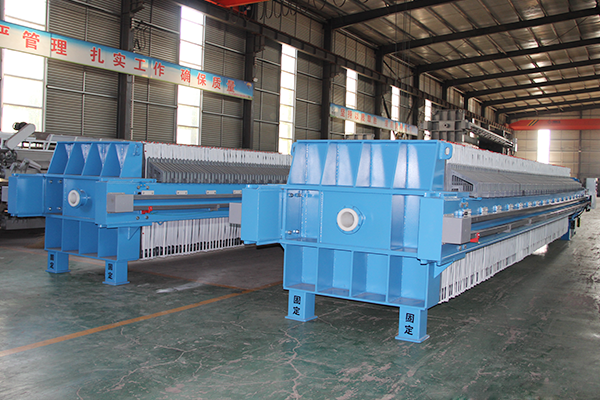
Every filter press issue has an identifiable root cause, and the most effective troubleshooting begins with systematic observation rather than guesswork and trial-and-error. Is the problem occurring during filling, drainage, compression, or discharge? Does it affect every chamber or only specific positions in the plate pack? Has it developed recently or always been present? Recording these observations before attempting any repair saves time and prevents misdiagnosis that can lead to unnecessary component replacement. Our manufacturer provides troubleshooting decision trees with every filter press, and our distributor support teams guide operators through detailed diagnostics for complex issues.
Leakage at Plate Sealing Surfaces
Leakage between adjacent plates is one of the most frequently reported filter press complaints. The most common root cause is damaged or worn sealing surfaces on plate edges — even minor scratches prevent the gasket from creating a complete closure along the entire plate perimeter. Inspect the plate faces visually and by touch, feeling for raised edges, chips, or grooves that disrupt the sealing line. Polypropylene plates can be smoothed with fine sandpaper in mild cases, but severely damaged plates require replacement to restore proper sealing performance.
Inadequate clamping force is the second leading cause of leakage between plates in service. If the hydraulic system cannot generate sufficient pressure to fully compress the plate pack, leaks will appear regardless of surface condition. Check the hydraulic cylinder clamping pressure against factory specifications. Low fluid level, worn cylinder seals, or a failing pump can all cause insufficient clamping force — our manufacturer stocks all replacement hydraulic components for every press model we have produced over the years.
Filter Cloth Blinding and Reduced Throughput
Blinding occurs when fine solid particles penetrate and coat the cloth surface, dramatically reducing permeability and extending cycle times with each successive operation. The telltale sign is progressively longer drainage phases across successive filtration cycles. Clay-rich slurries and colloidal materials are the most common blinding culprits in mineral processing and ceramics applications. Addressing blinding starts with cloth selection based on particle size distribution analysis — our manufacturer supplies a comprehensive range of cloth weave densities and recommends the appropriate specification based on laboratory analysis of your slurry samples.
Chemical blinding results from precipitation or polymerization reactions that deposit solids within cloth fibers rather than on the surface where they could be washed away during cleaning. This type of blinding is often reversible through appropriate chemical cleaning using the correct agent for your specific chemistry. Our factory technical team provides detailed cleaning protocol recommendations for specific chemistry types, drawing on practical experience from hundreds of field installations.
Hydraulic System Faults
Hydraulic problems manifest in several distinct patterns during filter press operation. Slow cylinder movement suggests fluid viscosity issues — cold fluid in unheated operating environments thickens and restricts flow through the system. A cylinder that advances in uneven jumps indicates trapped air in the hydraulic circuit, requiring a systematic bleeding procedure. Our manufacturer recommends installing fluid preheaters for cold-climate operations and provides complete hydraulic bleeding procedures in our equipment operation manuals.
Erratic clamping force with fluctuating pressure during an active cycle points to internal hydraulic leaks — typically worn cylinder seals or damaged proportional valves. While these require attention, the press can typically continue operating at reduced pressure to minimize production disruption. Our supplier stocks complete hydraulic seal kits and valve replacement units for rapid maintenance response, minimizing downtime before full performance is restored.
Uneven or Excessive Cake Moisture
Variable cake moisture across different chambers usually indicates uneven filling during the previous slurry feed stage. Feed distribution blocks or clogged individual chamber feed ports create unbalanced fill rates, meaning some chambers form thinner cakes that drain differently. Inspect the feed header pressure at multiple plate positions — intermediate pressure gauges reveal distribution problems quickly. Our factory engineers recommend installing manifold pressure indicators during commissioning for this diagnostic purpose.
High moisture across all chambers, despite adequate compression time and applied pressure, usually signals cloth degradation or incorrect cloth installation during the previous maintenance event. Aging cloths lose permeability at different rates across the plate pack, producing variable moisture results in discharged filter cakes. A preventive cloth replacement schedule — even when cloths appear superficially intact — prevents this gradual performance decline from affecting product quality and process economics.
Preventive Practices and Manufacturer Support
The most effective troubleshooting is prevention through systematic maintenance and monitoring. Regular inspection schedules, consistent cleaning routines, and accurate cycle logging catch developing problems before they interrupt production schedules. Our manufacturer offers annual service contracts that include factory-trained technician visits, comprehensive press inspections, and proactive component replacement before failures occur during production.
We invite global distributors to join our technical support network as authorized service providers for their regions. Our factory provides troubleshooting documentation, online and telephone technical support, and training programs that equip distributor technicians to resolve most field issues independently. Building local support capability through trusted distribution partners ensures our customers receive responsive professional service wherever their filtration equipment operates worldwide.
References
Sources: Svarovsky, L. — Solid-Liquid Separation: Principles and Applications, Butterworth-Heinemann; Lloyd, P.J. — Handbook of Filter Media, Elsevier Science; BSM Consulting — Filter Press Troubleshooting Field Handbook, Industrial Dewatering Division; WEF — Operation of Water Resource Recovery Facilities Manual of Practice No. 11.
 Recommended Products
 Contact us
—— Contact:Manager
—— Tel:+86 16632826789
—— Email:sales@hbscfilterpress.com
—— Url:https://www.hbscfilterpress.com
—— Address:West Zone of Economic Development Zone, Fucheng County, Hengshui City, Hebei Province