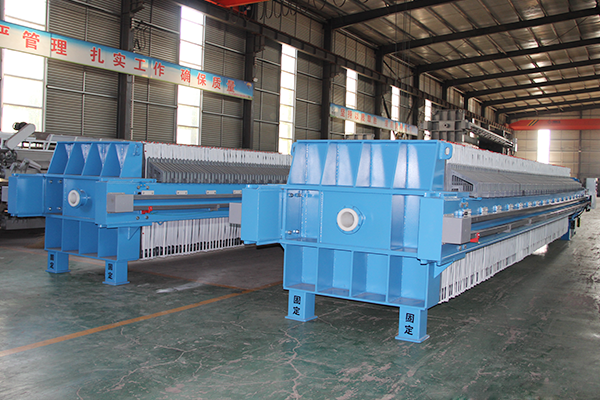

NewsDetails
Filtration Cycle Optimization: Techniques for Higher Efficiency and Lower Costs
author:grh time:2026-07-24 20:32:52 Click:83
Understanding the Full Filtration Cycle
A filter press cycle consists of multiple phases: filling, initial drainage, diaphragm compression where applicable, wash stage if used, and cake discharge. Each phase consumes time and energy, and bottlenecks in any single phase constrain overall throughput. Optimization requires examining each phase independently before tuning their interaction. A manufacturer who understands this holistic view can help operators configure cycles that extract maximum value from their equipment across extended production runs.
Optimizing the Filling Phase
The filling phase delivers slurry into the filter chambers at pump pressure, typically four to ten bar depending on the slurry pump configuration. The goal is to fill chambers evenly before a premature surface layer blinds the filter cloth. Optimizing this phase means selecting an appropriate pump — progressing cavity pumps handle high-solids slurries better than centrifugal pumps, which can struggle with anything beyond thin suspensions. As a factory-backed supplier, we help customers specify the right pump type during equipment selection to avoid filling bottlenecks that plague undersized systems.
Feed flow rate should ramp gradually rather than starting at full flow. Abrupt high-velocity entry creates turbulent mixing that disrupts the filter cake formation process, leading to uneven solids distribution across chambers. Our factory configures variable speed drives on feed pumps specifically to enable this gradual ramp, giving operators precise control over filling dynamics from the control panel. Sudden pressure spikes during filling also accelerate wear on cloth and plate sealing surfaces, increasing maintenance frequency unnecessarily.
Maximizing Dewatering Performance
Dewatering performance depends on three controllable factors: applied pressure, cake thickness, and cloth permeability. Higher pressures drive more liquid through the cake but can compress fine solids into a dense, impermeable layer that halts drainage prematurely. Finding the pressure sweet spot is process-specific — our manufacturer conducts pilot testing with customer slurry samples to determine the optimal pressure profile before equipment leaves the factory. This testing investment pays for itself many times over through avoided trial-and-error at the customer site.
Diaphragm compression time also influences final moisture content significantly. Many operators terminate compression too early, leaving two to three percentage points of additional moisture in the cake. With energy costs being a fraction of disposal cost savings from lower moisture, extending compression by a few minutes per cycle is almost always economically justified. Our supplier recommends installing moisture sensors to empirically determine the point of diminishing returns for compression duration, rather than relying on arbitrary time settings.
Reducing Unplanned Downtime
Discharge-related downtime is the most common cycle efficiency killer in production environments. Clogged feed lines, misaligned plate return, and damaged cloth tears all extend the time between cycles significantly. Standardizing discharge procedures including required cleaning steps and inspection checkpoints reduces the variability that causes these delays. Our factory has documented best-practice discharge procedures for dozens of applications and provides this guidance during commissioning, drawing on experience from hundreds of installations worldwide.
Preventive maintenance scheduling directly affects cycle reliability over months and years of operation. Mapping maintenance tasks to calendar intervals rather than equipment runtime creates a more consistent maintenance pattern that catches developing problems before they interrupt production. Our manufacturer offers maintenance contracts that bundle scheduled service visits, replacement parts, and performance reporting into a predictable monthly cost — an approach our distribution partners find valuable when presenting total cost of ownership to end customers considering equipment purchases.
Data-Driven Cycle Improvement
Modern filter presses equipped with PLC controllers and data logging capabilities generate valuable performance data that informs optimization decisions. Tracking pressure profiles, cycle durations, and filtrate quality across hundreds of cycles reveals trends that manual observation would miss entirely. Gradually increasing cycle times, for example, often signal cloth blinding before it becomes operationally critical — data allows corrective action during a scheduled maintenance window rather than forcing an emergency shutdown that disrupts production schedules. Our factory builds all automated presses with data logging as a standard feature rather than an optional extra.
Partner With an Experienced Manufacturer
Every optimization strategy ultimately depends on having equipment designed for adjustability and longevity from a factory with deep application experience. Our factory builds filter presses with oversized hydraulic systems, precision-machined plate rails, and industrial-grade controls that support years of cycle optimization without mechanical fatigue. We also offer performance guarantees backed by process testing at our factory test facility before equipment ships to ensure the promised performance is achieved in practice, not just on paper.
Global distributors are welcome to partner with our manufacturer for filter press supply and service support. Our factory provides comprehensive technical training, competitive distributor pricing, and ongoing product development support that keeps our distribution partners ahead of competitors. Contact us to discuss how our factory can support your filtration equipment market with high-performance equipment backed by genuine technical expertise and reliable supply.
References
Sources: Wakeman, R. & Tarleton, S. — Colloidal Phenomena and Filtration, Elsevier Science; Dickerson, R. — Fundamentals of Mechanical Filtration, CRC Press; IUPAC — Compendium of Chemical Terminology, Filtration Section; Battelle Memorial Institute — Industrial Dewatering Process Optimization Report.
 Recommended Products
 Contact us
—— Contact:Manager
—— Tel:+86 16632826789
—— Email:sales@hbscfilterpress.com
—— Url:https://www.hbscfilterpress.com
—— Address:West Zone of Economic Development Zone, Fucheng County, Hengshui City, Hebei Province