
NewsDetails
A Detailed Look at the Core Components of a Plate and Frame Filter Press
author:Shuangcheng time:2025-12-30 11:43:15 Click:142
Understanding the Plate and Frame Filter Press
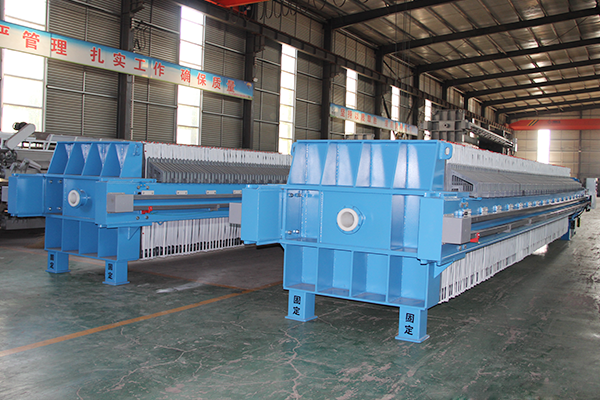
A plate and frame filter press is a widely used filtration system designed for efficient solid-liquid separation in industrial processes. Its performance depends not only on operating parameters but also on the quality and configuration of its core components. Understanding how these components function together helps users evaluate equipment reliability, maintenance requirements, and long-term performance.
In modern filtration operations, the plate and frame filter press remains a preferred solution due to its modular design, consistent filtration results, and adaptability across different industries. This article takes a detailed look at the key components that define system performance and operational stability.
Filter Plates: The Foundation of Filtration
Filter plates form the primary filtration surface within a plate and frame filter press. They are arranged alternately with frames to create filtration chambers where solids are retained and filtrate passes through filter media.
Key considerations for filter plates include:
·Plate material selection
·Surface design and filtration area
·Resistance to pressure and chemical exposure
High-quality plates maintain dimensional stability under pressure, ensuring uniform cake formation and reducing the risk of leakage during operation.
Frames and Filtration Chambers
Frames are positioned between filter plates to create chambers for slurry containment. The depth of the frame determines the volume available for solids accumulation during filtration.
Important design aspects include:
·Frame thickness and consistency
·Alignment accuracy during assembly
·Compatibility with filter media
Properly engineered frames contribute to efficient cake discharge and predictable filtration cycles.
Filter Media and Sealing Systems
Filter media plays a critical role in determining filtration efficiency and clarity. It acts as a barrier that allows liquid to pass while retaining solids within the chamber.
Sealing systems work alongside filter media to prevent leakage. Effective sealing depends on:
·Precision-machined sealing surfaces
·Suitable gasket materials
·Consistent closing pressure
Together, these elements ensure stable operation and minimize material loss.
Hydraulic System and Closing Mechanism
The hydraulic system provides the closing force required to seal plates and frames during filtration. It converts hydraulic pressure into mechanical force, holding the entire plate pack together.
Core hydraulic components typically include:
·Hydraulic cylinder
·Pump and oil reservoir
·Control and safety valves
A stable hydraulic system ensures consistent pressure throughout the filtration cycle and supports safe plate opening and closing.
Structural Frame and Support System
The structural frame supports the entire assembly of the plate and frame filter press. It must withstand repeated pressure cycles without deformation.
Design considerations for the frame include:
·Load-bearing capacity
·Welding quality and alignment
·Surface protection against corrosion
A rigid and well-constructed frame improves long-term reliability and reduces maintenance demands.
Discharge and Collection Systems
After filtration, solids are discharged from the chambers, and filtrate is collected through designated outlets. Efficient discharge mechanisms reduce downtime between cycles.
Common discharge-related features include:
·Gravity or assisted cake release
·Filtrate drainage channels
·Drip trays and collection piping
These systems contribute to smoother operation and improved workplace cleanliness.
Automation and Control Elements
Modern plate and frame filter press systems may incorporate automation features to enhance productivity and consistency. Control systems monitor pressure, cycle timing, and plate movement.
Automation benefits include:
·Reduced manual intervention
·Improved cycle repeatability
·Enhanced safety during operation
While not mandatory, automation can significantly improve efficiency in high-volume production environments.
Manufacturing and Production Considerations
From a manufacturing perspective, component quality and production consistency are critical. Experienced manufacturers implement standardized production processes to ensure uniform performance across multiple units.
Key production indicators include:
·Precision machining and assembly
·Component testing before installation
·Capability to support bulk supply requirements
Controlled production ensures that each plate and frame filter press meets defined performance standards, even at large production volumes.
Maintenance and Component Longevity
Routine maintenance extends the service life of core components. Regular inspection of plates, frames, seals, and hydraulic systems helps identify wear before it affects performance.
Maintenance-friendly designs reduce downtime and support long-term operational stability, especially in continuous industrial applications.
Conclusion: How Core Components Define Plate and Frame Filter Press Performance
The performance of a plate and frame filter press depends on the integration of its core components, from filter plates and frames to hydraulic and structural systems. Each element plays a role in achieving reliable filtration results and operational efficiency.
For industrial users, selecting equipment produced by experienced manufacturers with proven production capabilities and bulk supply support ensures consistent quality and dependable performance. A well-engineered plate and frame filter press, built with durable components and supported by controlled production processes, remains a reliable solution for demanding filtration applications.
References
GB/T 7714:Wakeman R, Tarleton E S. Solid/liquid separation: principles of industrial filtration[M]. Elsevier, 2005.
MLA:Wakeman, Richard, and E. Steve Tarleton. Solid/liquid separation: principles of industrial filtration. Elsevier, 2005.
APA:Wakeman, R., & Tarleton, E. S. (2005). Solid/liquid separation: principles of industrial filtration. Elsevier.
 Recommended Products
 Contact us
—— Contact:Manager
—— Tel:+86 16632826789
—— Email:sales@hbscfilterpress.com
—— Url:https://www.hbscfilterpress.com
—— Address:West Zone of Economic Development Zone, Fucheng County, Hengshui City, Hebei Province