
NewsDetails
Filter Press in Chemical and Pharmaceutical Industries: Meeting Stringent Filtration Standards
author:grh time:2026-08-21 20:27:53 Click:107
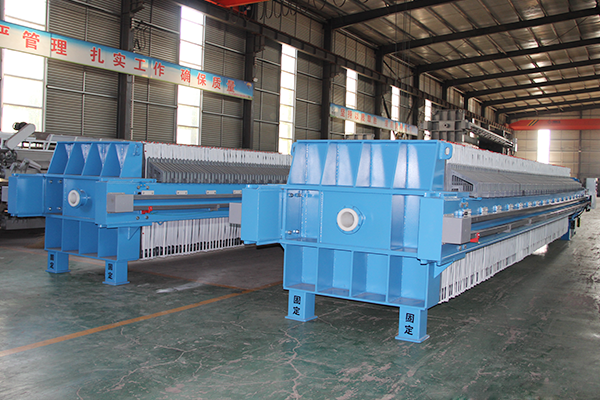
The chemical and pharmaceutical industries present some of the most demanding requirements in all of industrial filtration. Slurries may be highly corrosive, temperatures may swing from cryogenic to above 200°C, pressures may exceed 30 bar, and the product itself may be worth hundreds of dollars per kilogram. A filter press operating in these conditions is not merely a piece of equipment —it is a critical process asset that must perform reliably, reproducibly, and without contaminating the product it processes. Understanding how filter presses are specified and operated in these sectors reveals both the technical challenges involved and the engineering solutions that address them.
Why Filter Presses Remain the Preferred Choice in Chemical Processing
Chemical manufacturers have access to a wide range of solid-liquid separation technologies: centrifuges, Nutsche filters, rotary drum filters, and crossflow membrane systems among them. Despite this competition, filter presses maintain a strong presence in chemical processing for reasons that are fundamentally practical. The sealed, batch-operated design contains process fluids completely, minimizing operator exposure and environmental release —a critical safety consideration when handling toxic, corrosive, or highly reactive materials.
The pressure-driven nature of filter press operation makes it particularly well-suited to processes where maximum cake dryness is required. In chemical synthesis, the solid product is often the primary target, and any residual mother liquor trapped in the filter cake represents both a yield loss and a contamination concern. Filter presses —particularly membrane presses —achieve the low moisture contents needed to minimize product loss and simplify subsequent drying steps.
Filter presses also offer a degree of flexibility that many alternatives cannot match. The plate stack can be reconfigured for different batch sizes, and the plate material, cloth type, and operating parameters can all be adjusted to suit a specific product. For multi-product facilities that run different chemistries through the same equipment, this adaptability is invaluable.
Materials of Construction: Matching Equipment to Chemistry
The most consequential specification decision in a chemical filter press is the material of construction. Choosing the wrong material leads to equipment degradation, product contamination, and potentially dangerous failures. The selection process must consider not just the primary slurry chemistry but also temperature effects, concentration changes during the cycle, and the possibility of unexpected excursions.
Polypropylene and copolymer polypropylene handle a wide range of acids, alkalis, and organic solvents at temperatures up to about 100°C. They are the default choice for most mid-temperature chemical applications. Reinforced grades offer improved resistance to stress cracking in aggressive environments.
PVDF (polyvinylidene fluoride) is chosen for applications involving strong acids —including hydrochloric and sulfuric acid —and for oxidizing chemicals where polypropylene would degrade. It tolerates temperatures up to approximately 140°C and offers excellent mechanical strength.
Stainless steel 316L is the standard for high-temperature applications and for processes involving organic solvents, food-grade materials, or pharmaceutical products. The 316L low-carbon grade minimizes carbide precipitation during welding, improving corrosion resistance in the heat-affected zones of fabricated components.
Halar (ECTFE) and other fluoropolymer coatings extend the chemical resistance of steel constructions into environments that would attack bare metal. These lined or coated vessels combine the mechanical strength of steel with the chemical inertness of fluoropolymers, at a cost significantly below solid fluoropolymer construction.
Pharmaceutical Applications: Regulatory and Quality Considerations
In pharmaceutical manufacturing, filter presses are used throughout the product lifecycle —from active pharmaceutical ingredient (API) synthesis and isolation to final dosage form processing. The regulatory environment governing pharmaceutical filtration is stringent, and equipment selection, validation, and operation must comply with current Good Manufacturing Practice (cGMP) requirements.
A GMP-compliant filter press installation typically includes: polished stainless steel product contact surfaces (typically 316L with a Ra below 0.8 micrometers); full traceability documentation for all wetted components including plates, frames, filter cloths, seals, and gaskets; a validated cleaning procedure that demonstrates complete removal of product residues and cleaning agent residues between campaigns; and documented integrity testing of filter cloths where critical performance parameters are at stake.
In antibiotic production, for example, filter presses separate mycelial biomass and insolubles from fermentation broth following the initial isolation step. The clarity of the filtrate directly affects the efficiency of downstream chromatography and crystallization steps. A poorly specified or operated press can introduce turbidity into the filtrate that fouls chromatography resins or introduces impurities into the crystalline product —consequences that ripple through the entire downstream process.
For sterile or aseptic applications, filter presses may be integrated into a closed system with sterile filtration membranes downstream, inert gas blanket systems to prevent oxidation, and sanitization procedures validated to eliminate microbial contamination. While filter presses themselves are not sterilizing equipment, they can be designed and operated to maintain the sterility of a downstream sterile barrier system.
Handling High-Value and Hazardous Products
When processing high-value chemical products, yield optimization becomes paramount. Every percentage point of product retained in the filter cake is worth money, and the design of the filter press system can significantly influence this figure. Counter-current washing —where wash liquid is introduced in multiple stages, passing through progressively cleaner cakes —can recover 98 to 99.5 percent of the mother liquor trapped in the cake, depending on the wash ratio and cake structure.
Membrane filter presses add particular value in high-value applications. The mechanical dewatering stage extracts residual liquid that would otherwise remain in the cake, reducing product loss and the subsequent thermal load in drying equipment. For thermally sensitive products —some APIs degrade at elevated temperatures —a membrane press that achieves lower moisture without additional thermal input is a significant process advantage.
For hazardous products —those that are toxic, carcinogenic, or otherwise dangerous to human health —filter presses offer inherent safety advantages through their enclosed design. However, this protection must be engineered into the system, not assumed. Sealed plates, leak-free gaskets, and properly designed discharge hoppers with enclosed collection systems all contribute to containing hazardous materials throughout the process cycle. Personal protective equipment (PPE) requirements, air monitoring, and emergency response procedures should all be documented and practiced before production begins.
Process Optimization and Yield Improvement
Even with the right equipment in place, there is always room to improve process performance. Optimization levers in filter press operation include:
Slurry conditioning: Adding filter aids such as diatomaceous earth or perlite can dramatically improve filtration rates in difficult slurries, though it adds consumable cost and introduces a filtration aid recovery step if the product must be separated from the filter aid.
Operating pressure optimization: Higher pressure drives faster initial filtration but can compress the cake and reduce permeability in the later stages. Finding the optimal operating pressure for a specific slurry often requires systematic testing.
Cycle termination logic: Ending the cycle at the correct pressure or time point balances throughput against cake dryness. Over-filtration wastes time without proportionate benefit; under-filtration leaves moisture and yield on the table.
Working with an experienced application engineering team —either from your equipment supplier or an independent consultant —to run systematic optimization trials typically pays for itself within a few production campaigns. The investment in time and testing generates data-driven operating parameters that maximize yield, throughput, and equipment life.
References:
Perry's Chemical Engineers' Handbook, 9th Edition, McGraw-Hill Education
Global Industry Analysts —Filter Press Equipment Market Report, 2024
Svarovsky, L. (2000). Solid-Liquid Separation, 4th Edition, Butterworth-Heinemann
WHO Technical Report Series —Good Manufacturing Practices for Pharmaceutical Products
 Recommended Products
 Contact us
—— Contact:Manager
—— Tel:+86 16632826789
—— Email:sales@hbscfilterpress.com
—— Url:https://www.hbscfilterpress.com
—— Address:West Zone of Economic Development Zone, Fucheng County, Hengshui City, Hebei Province