
NewsDetails
Filter Press Maintenance Checklist: Daily, Weekly, and Annual Routines for Maximum Equipment Life
author:grh time:2026-08-23 20:45:57 Click:164
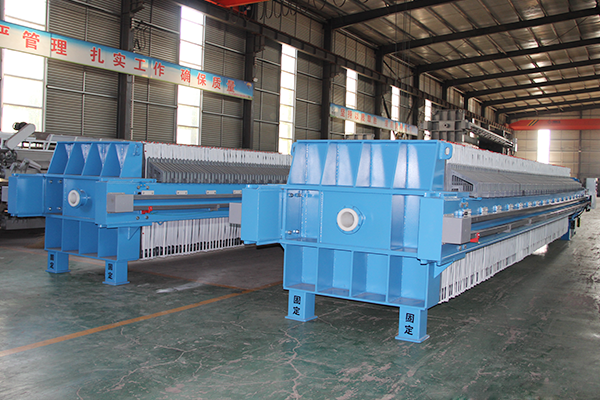
A filter press is a significant capital asset, and like any complex industrial machine, it rewards consistent care with longer service life, more predictable performance, and lower total operating cost. Yet in many facilities, maintenance is treated as purely reactive —the press runs until something breaks, then repairs are made under time pressure, often at premium cost and with production losses in between. The contrast with a proactive, scheduled approach is stark: well-maintained filter presses routinely operate for 20 years or more, while neglected presses may require major component replacement within 5 to 8 years.
This maintenance guide provides a structured, practical framework for keeping your filter press in top condition. The schedules below are based on typical industrial operating conditions —adjust frequencies to match your actual cycle rate and slurry aggressiveness. A press running 50 cycles per day will need more frequent attention than one running 5 cycles per day.
Daily Inspection Routine: 10 Minutes That Prevent Major Failures
A daily walkaround inspection takes about 10 minutes and catches most developing problems before they become failures. Train operators to perform these checks consistently at the start of each shift or production day.
Check hydraulic oil level in the reservoir —top up with the correct grade if below the minimum mark
Scan all visible hydraulic connections, hose fittings, and the cylinder rod seal for signs of leakage
Verify the pressure gauge reads zero at rest before starting the closing cycle
Listen for unusual hydraulic pump sounds —whining, rattling, or irregular cycling indicates problems
Confirm the plate closing sequence completes fully and the clamping pressure reaches the set point
Inspect a few filter cloths during discharge for tears, excessive stretching, or blinding
Check the plate sealing surfaces for damage, warping, or accumulated debris
Confirm that filtrate is clear and free of solids —turbid filtrate indicates cloth damage or misalignment
Note any anomalies in the maintenance log with date, time, and description
Weekly Maintenance Tasks: 30 to 60 Minutes of Preventive Care
Weekly tasks go beyond the quick visual check and address the components that degrade gradually over time. Schedule these during a planned production pause —perhaps a Monday morning before the first cycle or a Friday afternoon before the weekend shutdown.
Inspect the condition and color of the hydraulic oil —dark, cloudy, or foamy oil should be sampled and tested; plan for an oil change if condition is poor
Check and tighten all hydraulic hose connections —vibration loosens fittings over time
Verify that the pressure relief valve is set to the manufacturer's specified pressure —never above or below the rated setting
Inspect filter cloth condition across the full plate stack —note any cloths approaching replacement criteria
Clean plate guide rails and tracks —accumulated debris affects plate alignment during opening
Check the condition of plate sealing surfaces for wear, chips, or deformation that could cause leakage
Inspect the cloth hanging and securing mechanisms —clips, ties, or grommets that are worn should be replaced
Test the automatic cycle sequence (if equipped) to confirm correct timing on each phase
Lubricate moving components —guide rails, threaded rods, and hinge points —with the specified lubricant
Monthly and Quarterly Tasks: Addressing Wear Systematically
Some maintenance tasks are needed less frequently but are no less important. Spreading them across a monthly or quarterly calendar ensures nothing is forgotten.
Every month, perform a more thorough inspection of the plate pack. Remove a representative sample of plates and examine their sealing surfaces, feed ports, and filtrate channels for wear and damage. Check that filter plate recesses are not deformed —a recessed plate that has lost its sharp edge will not seal properly against adjacent plates. Also clean the filtrate collection channels with a brush or compressed air to remove any accumulated debris that could restrict flow.
Quarterly, take a deeper look at the hydraulic system. Replace the hydraulic oil filter element if your system has one —this is a low-cost component that prevents abrasive particles from accelerating pump wear. Check the accumulator pre-charge pressure if your system has one (a nitrogen-filled accumulator that has lost its charge acts like a dead weight rather than a shock absorber). Inspect electrical connections to motors, solenoids, and sensors, tightening any that show signs of loosening. Review the maintenance log for any recurring issues or trends that warrant attention.
Annual Service: Deep Inspection and Component Renewal
Once per year —or more frequently for high-cycle operations —schedule a comprehensive service that addresses all worn components and verifies the press against its original specifications.
Complete hydraulic oil and filter change —use the manufacturer-specified oil grade
Replace hydraulic cylinder seals and any worn hoses showing signs of age or abrasion
Inspect and replace worn filter cloths across the full plate stack; record replacement dates in the maintenance log
Measure and record plate weights —a significant weight loss in polypropylene plates indicates chemical attack or abrasion that needs investigation
Replace any cracked, chipped, or deformed filter plates —do not continue operating with damaged plates
Calibrate the pressure transducer and pressure switch against a calibrated reference gauge
Inspect the main frame structure, side bars, and beam for signs of corrosion, cracking, or deformation
Verify that all safety interlocks function correctly —the press should not close if plates are misaligned, and the emergency stop should immediately release clamping pressure
Check and recalibrate the PLC or control system cycle parameters if operating experience has identified better settings
Managing Spare Parts Inventory
Preventive maintenance is only effective if you have the right parts on hand when needed. Running a filter press with a known-worn cloth because the replacement has not arrived is a false economy —the cost of production downtime almost always exceeds the carrying cost of a modest spare parts inventory.
Work with your supplier to identify the critical spare parts for your specific press model and establish a recommended stock level. At minimum, keep the following on hand: a full set of filter cloths (one complete change), hydraulic cylinder seal kits, pressure gauge replacements, and a spare set of plate gaskets or O-rings if your configuration uses them. For presses with automation, keep a spare pressure transducer and a spare solenoid valve or two on the shelf. These items are inexpensive relative to the cost of an unplanned shutdown.
Training and Documentation: The Overlooked Maintenance Multipliers
The most sophisticated maintenance schedule is useless if it is not followed consistently. Invest in proper training for everyone who operates or maintains the press. Operators need to understand what normal looks and sounds like so they can spot abnormalities early. Maintenance technicians need sufficient hydraulic and electrical knowledge to perform the tasks assigned to them without creating new problems.
Maintain a maintenance log —digital or paper —that records every inspection, repair, and anomaly. Over time, this log reveals patterns: a cloth that consistently fails in a specific position may indicate a plate alignment problem; a hydraulic pump that shows declining pressure may be approaching the end of its service life; seasonal variations in filtrate clarity may trace to temperature effects on slurry viscosity. A well-kept log transforms reactive maintenance into predictive maintenance, addressing problems before they cause failures.
Finally, keep the manufacturer's operation and maintenance manual accessible —not filed in an office cabinet, but available at the press itself for reference during maintenance activities. The specifications, tolerances, and procedures documented there are the authoritative reference for your specific machine, and they should guide every maintenance decision.
References:
Perry's Chemical Engineers' Handbook, 9th Edition, McGraw-Hill Education
Water Environment Federation —WEF Manual of Practice No. 8, Operation of Municipal Wastewater Treatment
Industrial Filter Media Handbook, Filtration + Separation Magazine
ISO 1219-1:2016 —Fluid Power Systems and Components —Graphic Symbols
 Recommended Products
 Contact us
—— Contact:Manager
—— Tel:+86 16632826789
—— Email:sales@hbscfilterpress.com
—— Url:https://www.hbscfilterpress.com
—— Address:West Zone of Economic Development Zone, Fucheng County, Hengshui City, Hebei Province