
NewsDetails
High-Pressure Diaphragm Filter Press vs Conventional Filter Press
author:Shuangcheng time:2026-02-13 20:09:08 Click:168
High-Pressure Diaphragm Filter Press Guide for Smarter Filtration
In industrial solid-liquid separation, choosing the right filtration equipment directly impacts productivity, operating cost, and final cake quality. Among the most common technologies are the high-pressure diaphragm filter press and the conventional filter press. While both serve the same core purpose, their structure, pressure behavior, and dewatering efficiency differ significantly.
This high-pressure diaphragm filter press guide explains how these two systems compare in real production environments. Built on practical engineering knowledge and manufacturer-level production experience with factory batch supply capability, the goal is to help buyers and process engineers select the most efficient solution for wastewater treatment, mining, chemical processing, and metallurgy.
What Is a Conventional Filter Press?
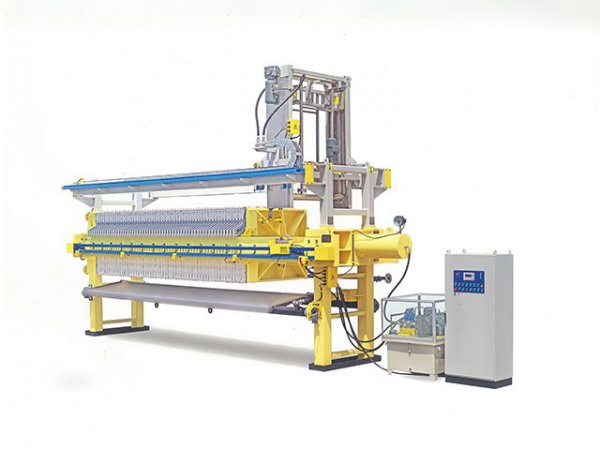
A conventional filter press uses fixed chamber plates lined with filter cloth. Slurry is pumped into the chambers, and hydraulic force closes the plates together. Liquid passes through the cloth, leaving solids behind as filter cake.
Key Characteristics
·Fixed chamber depth
·One-stage filtration
·Pressure mainly from feed pump
·Simpler mechanical structure
·Lower initial investment
Conventional presses are widely used for general dewatering where extremely high dryness is not required.
However, because pressure only comes from the feed pump and plate compression, moisture removal reaches a natural limit once cake resistance increases.
What Is a High-Pressure Diaphragm Filter Press?
A high-pressure diaphragm filter press upgrades the standard design by adding flexible membranes (diaphragms) inside the plates. After initial filling, the diaphragm expands using water or air pressure to squeeze the cake further.
Key Characteristics
·Two-stage filtration and squeezing
·Adjustable membrane pressure
·Higher cake compression
·Improved moisture removal
·Faster cycle optimization
This secondary squeezing stage is what separates diaphragm systems from conventional presses, making them ideal for applications requiring very low cake moisture.
Core Difference: Pressure Mechanism
The main technical difference lies in how pressure is applied to the cake.
Conventional Filter Press
·Pressure generated mainly by slurry pump
·Once cake builds up, flow decreases
·Limited final compression
·Moisture reduction plateaus
High-Pressure Diaphragm Filter Press
·Initial filtration by feed pressure
·Secondary membrane squeeze applies uniform force
·Pressure penetrates deeper into cake
·Additional water removal occurs
This controlled squeezing improves both throughput consistency and final cake dryness.
Throughput Comparison
Throughput refers to how much material is processed per unit time.
Conventional System
·Faster filling for low solids
·Cycle time increases as cake thickens
·Limited by pump pressure
·Often requires longer filtration to reach acceptable dryness
High-Pressure Diaphragm System
·Optimized filling plus membrane squeeze
·Shorter total cycle for same dryness
·Handles higher solids loading
·Maintains stable production rates
Although diaphragm presses may add a squeeze step, overall throughput is often higher because less time is wasted on extended filtration.
Cake Dryness Performance
Cake dryness is where the high-pressure diaphragm filter press truly excels.
Conventional Press
·Residual moisture remains higher
·Pressure cannot fully penetrate thick cakes
·Drainage distance limits water removal
High-Pressure Diaphragm Press
·Membrane applies uniform compression
·Water is forced out of micro-pores
·More consistent cake structure
·Lower moisture content achieved
In industries like mining tailings, chemical sludge, and hazardous waste treatment, lower cake moisture means reduced transport cost and easier disposal.
Energy Efficiency and Operating Cost
Energy consumption is another important factor.
Conventional Press
·Relies heavily on pump pressure
·Longer running time for pumps
·Less controlled pressure profile
High-Pressure Diaphragm Press
·Shorter filtration cycles
·Efficient squeeze phase
·Reduced pump workload
·Lower energy per ton processed
Even though diaphragm systems use additional squeeze pressure, their efficiency often results in lower total energy cost over time.
Automation and Process Control
Modern filtration favors automation.
Conventional Press Automation
·Basic hydraulic closing
·Manual or semi-auto plate shifting
·Limited cycle optimization
High-Pressure Diaphragm Press Automation
·PLC-controlled filtration and squeeze
·Pressure and time programmable
·Automatic cake discharge
·Integrated safety interlocks
From a manufacturer production perspective, diaphragm presses are typically designed with higher automation compatibility, improving operator safety and production stability.
Maintenance and Service Life
Maintenance affects long-term ownership cost.
Conventional Press
·Fewer moving parts
·Lower spare parts cost
·But higher cloth wear due to moisture retention
High-Pressure Diaphragm Press
·Additional membrane components
·Requires proper pressure control
·Longer cloth life due to better cake release
With correct factory production standards and material selection, diaphragm systems achieve long service life even under high pressure.
Application Scenarios
Different industries benefit differently:
·Wastewater sludge – diaphragm press for lower moisture
·Mining tailings – diaphragm press for high dryness
·Chemical processing – diaphragm press for uniform cake
·General filtration – conventional press for cost control
Professional high-pressure diaphragm filter press manufacturers evaluate slurry characteristics during the design and manufacturing stages to ensure the equipment is matched to actual operating conditions.
Multilingual Technical Insight
In global filtration markets, technical discussions often include different languages. For example:
The high-pressure membrane filter press provides a drier sludge thanks to an additional compression stage.
Meaning: A high-pressure diaphragm filter press produces drier cake through an additional compression stage.
Production and Factory Considerations
Choosing equipment is not just about technology, but also about supply capability. Reliable factory production ensures:
·Consistent plate machining
·Stable diaphragm material quality
·Batch manufacturing capacity
·Testing before delivery
Working directly with a high-pressure diaphragm filter press manufacturer with production and bulk supply capability ensures performance consistency across large projects and long-term support.
Conclusion: Choosing the Right High-Pressure Diaphragm Filter Press Solution
Both systems serve important roles, but the comparison is clear: a high-pressure diaphragm filter press delivers superior cake dryness, stable throughput, and advanced process control compared to a conventional filter press.
This high-pressure diaphragm filter press guide shows that while conventional presses offer simplicity and lower entry cost, diaphragm technology provides higher efficiency, lower moisture content, and better long-term economics.
By partnering with a manufacturer supported by factory production and batch supply capability, users gain filtration solutions engineered for performance, durability, and scalable production.
When filtration quality, efficiency, and operational reliability matter, the high-pressure diaphragm filter press becomes a powerful investment in modern solid-liquid separation.
References
GB/T 7714:Zhu Y F, Qian J Y, Zhang Q K, et al. Experimental analysis on filter press and energy consumption performance of diaphragm press drying device in chemical post-processing integrated equipment[J]. Case studies in thermal engineering, 2016, 7: 92-102.
MLA:Zhu, Yin-Fa, et al. "Experimental analysis on filter press and energy consumption performance of diaphragm press drying device in chemical post-processing integrated equipment." Case studies in thermal engineering 7 (2016): 92-102.
APA:Zhu, Y. F., Qian, J. Y., Zhang, Q. K., Kuang, J. Y., Gao, X. F., & Jin, Z. J. (2016). Experimental analysis on filter press and energy consumption performance of diaphragm press drying device in chemical post-processing integrated equipment. Case studies in thermal engineering, 7, 92-102.
 Recommended Products
 Contact us
—— Contact:Manager
—— Tel:+86 16632826789
—— Email:sales@hbscfilterpress.com
—— Url:https://www.hbscfilterpress.com
—— Address:West Zone of Economic Development Zone, Fucheng County, Hengshui City, Hebei Province