
NewsDetails
How Chamber Volume Affects Throughput and Cake Dryness
author:Shuangcheng time:2026-02-10 19:40:58 Click:73
Chamber Filter Press Guide for Performance Optimization
In industrial solid-liquid separation, performance is defined by two critical metrics: throughput and cake dryness. Both are directly influenced by the internal structure of the equipment — especially chamber volume.
This Chamber Filter Press guide explores how chamber size and configuration affect filtration efficiency, cycle time, and moisture content in the final cake. Built on practical production experience and Chamber Filter Press manufacturer insights with factory production and batch supply capability, this article helps engineers and buyers optimize equipment selection for real-world processing demands.
Whether in wastewater treatment, mining slurry, chemical processing, or metallurgy, understanding chamber volume is key to unlocking stable, cost-effective filtration.
What Is Chamber Volume in a Chamber Filter Press?
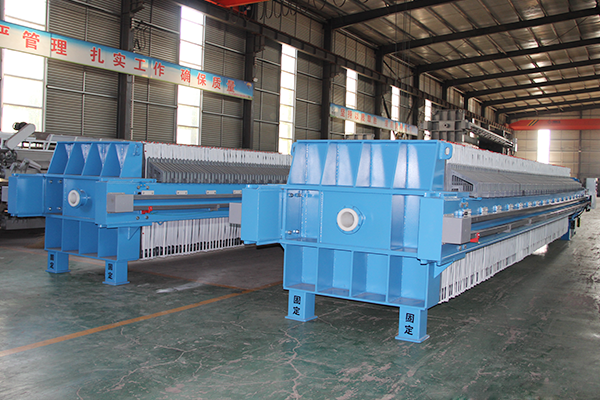
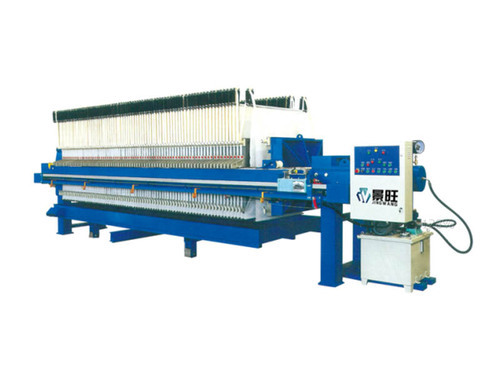
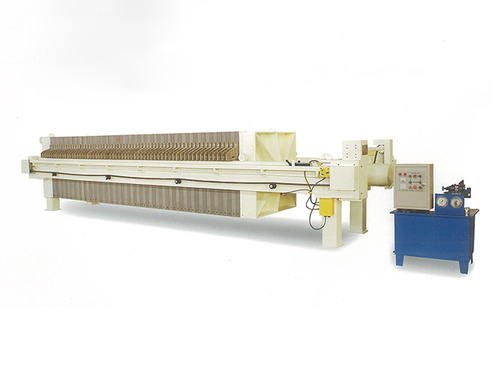
In a Chamber Filter Press, the chamber is formed between two adjacent filter plates lined with filter cloth. When plates are pressed together hydraulically, slurry is pumped into these chambers.
Chamber volume refers to the total internal capacity available for slurry within each cycle.
It is determined by:
·Plate size (e.g., 800mm, 1000mm, 1500mm)
·Chamber depth
·Number of plates
·Plate profile design
Larger chamber volume means more slurry can be processed per cycle, but it also influences pressure distribution, filtration time, and moisture removal behavior.
How Chamber Volume Impacts Throughput
Throughput is the amount of material processed per unit time. Chamber volume affects throughput in several ways:
1. Load Capacity per Cycle
A bigger chamber holds more slurry. This increases the mass of solids per batch, allowing more material to be filtered in each press cycle. For high-production environments, increased volume directly boosts output.
However, simply increasing volume without optimizing pressure and flow can reduce efficiency.
2. Filling Time and Hydraulic Balance
As chamber volume increases, filling time becomes longer. More slurry requires:
·Higher feed pressure
·Stable pump capacity
·Balanced distribution across all chambers
If feed systems are undersized, large chambers may not fill evenly, lowering throughput instead of increasing it.
3. Filtration Rate and Cake Build-Up
Thicker chambers allow thicker cake formation. While this increases solids capture, it also raises filtration resistance. Over-thick cakes slow liquid flow, increasing cycle time and reducing effective throughput.
So, throughput is a balance between:
·Volume
·Pressure
·Cake thickness
·Cycle speed
Proper chamber sizing ensures maximum productivity without unnecessary delays.
How Chamber Volume Influences Cake Dryness
Cake dryness refers to how much liquid is removed from solids after filtration. Chamber volume plays a direct role in moisture behavior.
1. Pressure Distribution
In deeper chambers, pressure must penetrate a thicker cake layer. If pressure is insufficient, the center of the cake retains more moisture, reducing dryness uniformity.
Smaller chambers allow pressure to act more evenly across the cake surface, improving moisture removal consistency.
2. Drainage Path Length
As chamber volume increases, the distance water must travel through the cake increases. Longer drainage paths mean:
·Slower dewatering
·Higher residual moisture
·Potential clogging risk
Optimized chamber depth ensures liquid exits efficiently without excessive resistance.
3. Air Blow and Secondary Drying
Many Chamber Filter Press systems use air blow or membrane squeeze to enhance dryness. Larger chambers benefit from secondary drying, but they also require longer air purge times.
Correct volume design allows secondary drying to operate effectively without overextending cycle duration.
Finding the Right Balance: Volume vs Efficiency
Bigger is not always better.
| Chamber Volume | Throughput Impact | Cake Dryness Impact |
|---|---|---|
| Small | Faster cycles | Better pressure penetration |
| Medium | Balanced performance | Uniform moisture removal |
| Large | High batch capacity | Needs higher pressure and longer drying |
The optimal configuration depends on:
·Slurry concentration
·Particle size
·Compressibility
·Desired cake moisture level
A professional Chamber Filter Press manufacturer evaluates these parameters during factory production design to match equipment geometry with application requirements.
Chamber Volume and Energy Consumption
Chamber volume also affects operational cost:
Larger chambers require higher pumping energy
Longer pressing cycles consume more hydraulic power
Increased air blowing increases compressor load
Optimizing chamber volume reduces:
·Power usage
·Maintenance stress
·Mechanical wear
Energy-efficient production design improves total ownership cost over the equipment lifecycle.
Process Control and Automation Effects
Modern Chamber Filter Press production systems integrate PLC control to adjust:
·Filling pressure
·Squeezing time
·Air blow duration
·Plate opening speed
Automation ensures chamber volume is fully utilized without sacrificing dryness. By monitoring flow rate and pressure curves, control systems prevent overfilling and uneven cake formation.
This makes chamber volume not just a mechanical parameter, but a process control variable.
Industry Applications and Volume Selection
Different industries prefer different chamber volume profiles:
·Wastewater sludge: Medium chambers for balance between speed and dryness
·Mining tailings: Large chambers for high solids loading
·Chemical processing: Controlled chamber depth for uniform cake
·Metallurgy: Deeper chambers with membrane squeeze for high dryness
Proper volume selection ensures production stability across varying material behavior.
Multilingual Technical Insight
In global filtration markets, performance data often appear in different languages. For example:
The large chamber volume increases the loading capacity, but requires higher pressure to achieve a dry filter cake.
This means: Larger chamber volume increases load capacity but requires higher pressure to achieve dry filter cake.
Such global engineering understanding reinforces why chamber volume must match hydraulic capability.
How Manufacturers Optimize Chamber Volume in Production
Professional Chamber Filter Press manufacturers with factory production capability use:
Simulation modeling
Slurry testing
Structural stress analysis
Pilot filtration trials
During production, chamber volume is fine-tuned to maximize throughput without compromising cake dryness or plate integrity. Batch manufacturing ensures consistency across large-scale installations.
Conclusion: Chamber Filter Press Guide for Smarter Design
Chamber volume is one of the most influential design factors in any Chamber Filter Press system. It controls how much slurry is processed, how fast filtration occurs, and how dry the final cake becomes.
This Chamber Filter Press guide shows that optimal performance is achieved not by maximizing volume blindly, but by balancing capacity, pressure, drainage distance, and drying strategy.
Working with a Chamber Filter Press manufacturer supported by factory production and bulk supply capability ensures chamber volume is engineered for real production conditions — delivering stable throughput, lower moisture content, and long-term operational efficiency.
A smarter chamber design means stronger performance in every filtration cycle.
References
GB/T 7714:Stickland A D, de Kretser R G, Scales P J, et al. Numerical modelling of fixed-cavity plate-and-frame filtration: formulation, validation and optimisation[J]. Chemical Engineering Science, 2006, 61(12): 3818-3829.
MLA:Stickland, Anthony D., et al. "Numerical modelling of fixed-cavity plate-and-frame filtration: formulation, validation and optimisation." Chemical Engineering Science 61.12 (2006): 3818-3829.
APA:Stickland, A. D., de Kretser, R. G., Scales, P. J., Usher, S. P., Hillis, P., & Tillotson, M. R. (2006). Numerical modelling of fixed-cavity plate-and-frame filtration: formulation, validation and optimisation. Chemical Engineering Science, 61(12), 3818-3829.
 Recommended Products
 Contact us
—— Contact:Manager
—— Tel:+86 16632826789
—— Email:sales@hbscfilterpress.com
—— Url:https://www.hbscfilterpress.com
—— Address:West Zone of Economic Development Zone, Fucheng County, Hengshui City, Hebei Province