
NewsDetails
Optimizing Slurry Feeding for Higher Filtration Efficiency
author:Shuangcheng time:2026-02-28 22:33:50 Click:128
In industrial solid–liquid separation, filtration efficiency depends not only on the equipment itself but also on how the slurry is introduced into the system. Proper slurry feeding directly affects cycle time, cake moisture, throughput, and operational stability.
As a professional Chamber Filter Press manufacturer with large-scale factory production and bulk supply capability, modern filtration systems are engineered to perform best when slurry feeding is optimized. This article explores how improving slurry feeding strategies can significantly enhance filtration efficiency and why it is essential for operations using a Chamber Filter Press in mining, chemical, wastewater, and process industries.
Why Slurry Feeding Matters in Filtration
Slurry is a mixture of solids and liquid that must be separated efficiently. If feeding conditions are poorly controlled, filtration performance can drop dramatically. Common problems include:
·Uneven chamber filling
·Premature cake formation
·Excessive pressure loss
·High cake moisture
·Long filtration cycles
Optimized feeding ensures the filter chambers fill uniformly, allowing the Chamber Filter Press to operate at its designed capacity. With professional filter press production engineering, feeding behavior is matched to plate structure and cloth characteristics for stable performance.
Understanding the Chamber Filter Press System
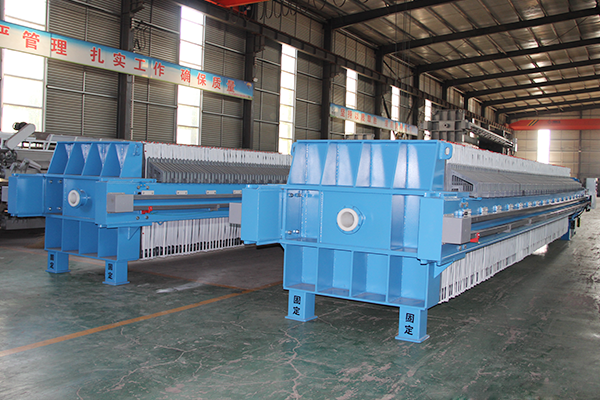
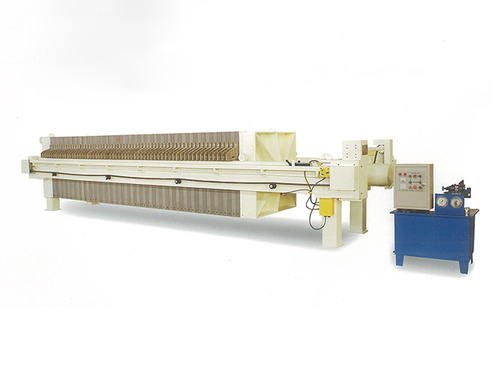
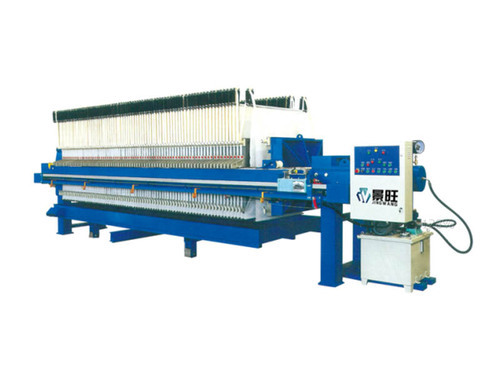
A Chamber Filter Press uses recessed plates to form chambers where slurry is pumped in under pressure. Liquid passes through the filter cloth, and solids accumulate as filter cake inside each chamber.
Modern Chamber Filter Press production focuses on:
·High-pressure resistance
·Precise chamber geometry
·Durable filter cloth interfaces
·Automation compatibility
Unlike membrane presses, chamber presses rely mainly on feed pressure, making slurry feeding control even more critical to achieve low moisture and high throughput.
Key Parameters of Slurry Feeding
To optimize slurry feeding, several variables must be managed carefully.
1. Slurry Concentration Control
Solids concentration directly influences cake formation speed and permeability.
·Too low: slow cake build-up and longer cycles
·Too high: rapid blockage and uneven filtration
An optimized concentration allows uniform cake growth across all chambers. With manufacturer-level Chamber Filter Press production, recommended slurry concentration ranges are provided to match different materials and industries.
2. Feeding Pressure Strategy
Feeding pressure drives slurry into the chambers.
·Low pressure leads to incomplete filling
·Excessive pressure causes cloth blinding and channeling
A stepped pressure approach is often best: start low for uniform distribution, then increase gradually. Modern filter press factory systems integrate pressure control valves and sensors to stabilize feeding behavior.
3. Feeding Flow Rate Optimization
Flow rate determines how fast slurry enters the press.
·High flow initially helps fill chambers
·Lower flow later prevents turbulence and cake damage
Balancing flow rate prevents uneven cake thickness and improves final filtration quality. Professional Chamber Filter Press manufacturers design feed ports and channels to support stable hydraulic flow.
4. Slurry Conditioning Before Feeding
Pretreatment improves slurry behavior.
Common conditioning methods:
·Flocculant addition
·pH adjustment
·Particle size control
Conditioned slurry forms porous cakes with better permeability. With optimized filter press production design, presses work efficiently with chemically prepared slurry to shorten cycle time.
Feeding Stages in a Chamber Filter Press
Optimized feeding usually follows multiple stages.
1.Initial Filling Stage – Low pressure, high flow to distribute slurry evenly.
2.Main Filtration Stage – Balanced pressure and flow for cake growth.
3.Final Compaction Stage – Reduced flow, stabilized pressure to finish dewatering.
Using automated control from Chamber Filter Press factory production, these stages can be programmed to improve repeatability and productivity.
Impact of Optimized Feeding on Filtration Efficiency
Improved slurry feeding leads to measurable benefits:
·Shorter filtration cycles
·Lower cake moisture
·Higher daily throughput
·Reduced cloth fouling
·Stable chamber filling
For plants using bulk Chamber Filter Press production systems, even small efficiency improvements translate into large operational savings.
Applications That Benefit from Feeding Optimization
Optimized slurry feeding is especially important in:
·Mining tailings dewatering
·Chemical slurry processing
·Ceramic and pigment filtration
·Wastewater sludge treatment
·Metallurgical concentrate separation
Scalable Chamber Filter Press factory manufacturing allows presses to be customized for each industry’s slurry characteristics and feeding requirements.
Automation and Monitoring of Slurry Feeding
Modern filtration plants rely on automation.
Key monitoring points include:
·Inlet pressure sensors
·Flow meters
·Chamber fill detection
·PLC-based sequence control
With advanced Chamber Filter Press production technology, feeding systems integrate digital control for consistent performance and reduced operator intervention.
Economic Benefits of Optimized Slurry Feeding
While feeding optimization requires initial engineering effort, the economic return is substantial:
·Reduced energy consumption
·Lower maintenance cost
·Higher production output
·Less downtime
·Improved product quality
With bulk Chamber Filter Press factory supply, optimized feeding maximizes the value of each installed filtration unit.
How to Optimize Slurry Feeding in Practice
To improve performance:
·Analyze slurry particle size and viscosity
·Adjust concentration before filtration
·Apply staged pressure feeding
·Maintain stable pump performance
·Monitor real-time filtration data
A professional Chamber Filter Press manufacturer can support system configuration and commissioning to match your material behavior and production goals.
Why Factory-Produced Chamber Filter Press Matters
Working with a qualified Chamber Filter Press manufacturer ensures:
·Precision chamber geometry
·Stable pressure performance
·High-quality plate materials
·Bulk production capability
·Customized feeding interfaces
Advanced Chamber Filter Press production facilities allow large-scale industrial projects to be supplied reliably and consistently.
Final Thoughts on Slurry Feeding Optimization
Optimizing slurry feeding is one of the most effective ways to improve filtration efficiency in a Chamber Filter Press system. By controlling concentration, pressure, flow rate, and conditioning methods, industries can achieve faster cycles, lower moisture, and higher productivity.
With professional manufacturer-level production, dependable factory bulk supply, and advanced engineering design, Chamber Filter Press systems become powerful tools for modern solid–liquid separation.
For any project seeking higher filtration efficiency and long-term operational value, optimizing slurry feeding within a Chamber Filter Press from a reliable production factory is a smart and future-ready investment.
References
GB/T 7714:Liu H, You K. Optimization of dewatering process of concentrate pressure filtering by support vector regression[J]. Scientific Reports, 2022, 12(1): 7135.
MLA:Liu, Huizhong, and Keshun You. "Optimization of dewatering process of concentrate pressure filtering by support vector regression." Scientific Reports 12.1 (2022): 7135.
APA:Liu, H., & You, K. (2022). Optimization of dewatering process of concentrate pressure filtering by support vector regression. Scientific Reports, 12(1), 7135.
 Recommended Products
 Contact us
—— Contact:Manager
—— Tel:+86 16632826789
—— Email:sales@hbscfilterpress.com
—— Url:https://www.hbscfilterpress.com
—— Address:West Zone of Economic Development Zone, Fucheng County, Hengshui City, Hebei Province