
NewsDetails
The Science Behind Plate and Frame Filtration and Its Impact on Product Quality
author:Shuangcheng time:2025-12-09 09:43:03 Click:199
The Role of Plate and Frame Filtration in Modern Processing
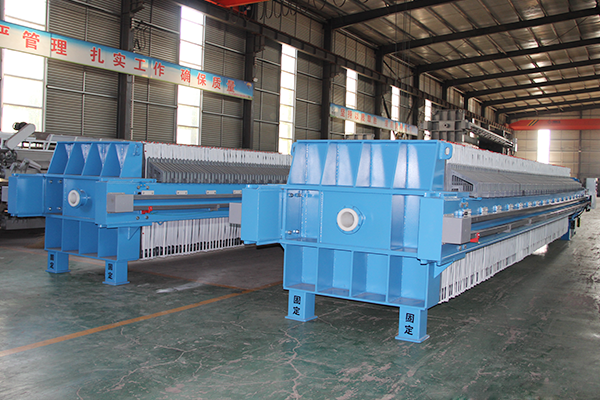
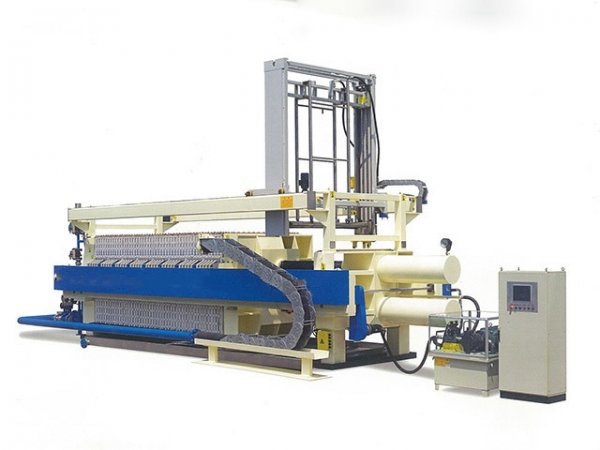
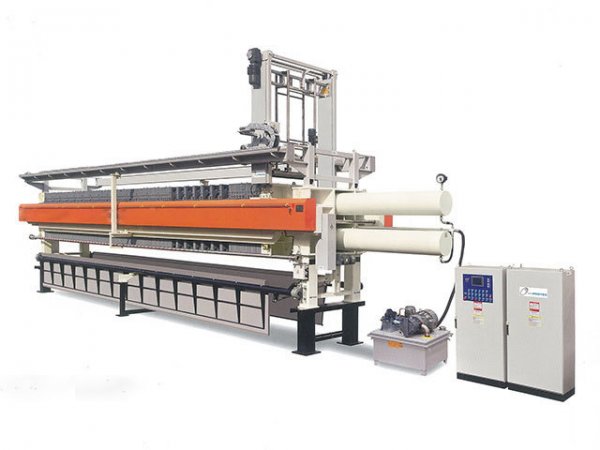
In today’s manufacturing and processing environments, a Plate and Frame Filter Press is widely recognized as a dependable solution for producing clean, stable, and high-quality outputs. This type of filtration system is valued not only for its precision but also for its flexibility when dealing with a wide range of solid-liquid separation challenges. Companies that require steady equipment availability often rely on an experienced manufacturer with proven production and bulk-supply capabilities to ensure consistent performance across all batches.
Understanding How a Plate and Frame Filter Press Operates
At its simplest level, the system relies on alternating plates and frames arranged into a sealed chamber. Once slurry is pumped into the equipment, pressure forces liquid through a filter medium while solids accumulate between the plates, forming a structured filter cake.
Unlike centrifugation or membrane filtration systems, the plate and frame approach provides high controllability of pressure and cake formation. As a result, operators can fine-tune cycles to meet clarity, throughput, or moisture-content targets depending on the application.
Structural Components and Their Technical Functions
Plates
Each plate contains grooves, drainage paths, and engineered surfaces designed to guide clarified fluid efficiently out of the filtration chamber. Their durability and precision help maintain uniform pressure and reduce cycle variability.
Frames
Frames create the necessary void space for holding slurry and forming the cake. The thickness of the frame determines the maximum cake volume, influencing how often the unit must be opened for cleaning or cake removal.
Filter Media
The filter cloth or filter sheet defines the separation boundary. Its pore structure, fabric tension, thickness, and material composition determine the efficiency of capturing targeted particle sizes.
Pressure System
Whether manual, mechanical, or hydraulic, the pressure system ensures the assembly is tightly sealed. It is responsible for delivering the force needed to push liquid through the cloth while retaining solids.
Cake Release Features
Modern designs may include semi-automatic or fully automated mechanisms for shaking or separating plates, making cake discharge faster and reducing labor requirements.
Scientific Principles That Shape Filtration Performance
Particle Mechanics
The behavior of suspended solids—shape, density, compressibility—plays a major role in how the cake forms. Compressible particles often produce denser cakes, which leads to slower flow rates but higher filtration quality.
Media Pore Structure
The filter medium operates using a combination of surface capture and depth-capture mechanisms. Surface capture traps larger particles, while depth capture retains finer contaminants within multiple layers of the media.
Pressure-Driven Flow
Higher pressure accelerates flow but can compact the cake excessively. Finding the right balance helps achieve optimal throughput without compromising clarity or stability.
Cake Layer Effects
As the cake builds up, it becomes a secondary filter. Interestingly, many filtration cycles become more efficient after the initial layers are formed, resulting in improved clarity over time.
Direct Effects on Final Product Quality
The filtration stage often determines whether the final product meets required safety or performance standards.
Purity and Clarity
Unwanted solids can affect taste, color, viscosity, or chemical stability. A Plate and Frame Filter Press helps achieve the clarity needed for premium-grade output.
Physical Stability
Residual particulates may cause sedimentation, discoloration, or instability during storage. Proper filtration greatly reduces these risks.
Equipment Protection
Cleaner intermediate materials place less stress on downstream systems such as pumps, reactors, or filling machines, extending equipment life and reducing operational costs.
Consistency
Filtration ensures each batch meets the same quality benchmarks, supporting reliable large-scale manufacturing processes.
Cross-Industry Applications
This equipment is widely used because of its adaptable design and strong separation efficiency. Common sectors include:
·Food and beverage clarification
·Pharmaceutical ingredient processing
·Botanical and chemical extraction
·Ceramic and mineral operations
·Municipal and industrial wastewater treatment
·Cosmetic emulsions and suspensions
Each industry benefits from predictable, repeatable separation results.
What to Look for When Selecting Filtration Equipment
For businesses exploring filtration solutions, several criteria are essential to consider:
Material Compatibility
Corrosion-resistant metals and chemical-stable components reduce contamination risks.
Cycle Time and Throughput
Production needs vary dramatically; selecting equipment sized appropriately for demand ensures consistent workflow.
Filter Media Specification
Choosing cloths with suitable porosity ensures high clarity while maintaining efficient flow.
Manufacturer Capability
Reliable manufacturers offer dependable production, technical support, and stable bulk-supply availability—critical for large operations or long-term projects.
Automation Options
Automated plate shifting, cloth washing, and cake discharge can significantly reduce labor and downtime.
Final Thoughts: Elevating Quality with a Plate and Frame Filter Press
A Plate and Frame Filter Press remains one of the most trusted methods for achieving high-precision solid-liquid separation. Its ability to deliver consistent clarity, stable processing, and customizable filtration cycles makes it invaluable across numerous industries. When paired with equipment supplied by a capable manufacturer offering strong production and bulk-supply capacity, organizations can achieve greater product quality, operational efficiency, and long-term reliability.
References
GB/T 7714:Svarovsky L. Solid-liquid separation[M]. Elsevier, 2000.
MLA:Svarovsky, Ladislav. Solid-liquid separation. Elsevier, 2000.
APA:Svarovsky, L. (2000). Solid-liquid separation. Elsevier.
 Recommended Products
 Contact us
—— Contact:Manager
—— Tel:+86 16632826789
—— Email:sales@hbscfilterpress.com
—— Url:https://www.hbscfilterpress.com
—— Address:West Zone of Economic Development Zone, Fucheng County, Hengshui City, Hebei Province