
NewsDetails
Working Principle of a High-Pressure Diaphragm Filter Press Explained
author:Shuangcheng time:2026-02-04 18:26:22 Click:128
Why the High-Pressure Diaphragm Filter Press Matters
In modern solid-liquid separation, achieving lower moisture content and higher efficiency is essential for industrial operations. Industries such as mining, chemical processing, wastewater treatment, and metallurgy rely heavily on advanced filtration systems to manage slurry and sludge. Among these systems, the high-pressure diaphragm filter press has become a preferred solution for projects that demand superior dewatering performance and operational stability.
Unlike traditional presses, a high-pressure diaphragm filter press integrates mechanical filtration with membrane squeezing technology, allowing operators to remove additional liquid after the initial filtration stage. This dual-action process improves cake dryness, reduces disposal costs, and enhances overall production efficiency.
From a supply perspective, working with a professional high-pressure diaphragm filter press manufacturer with stable production and factory capacity ensures consistent quality, scalable output, and dependable performance for long-term industrial projects. This article explains the working principle, structure, benefits, and production logic behind modern high-pressure diaphragm filter press systems.
What Is a High-Pressure Diaphragm Filter Press?
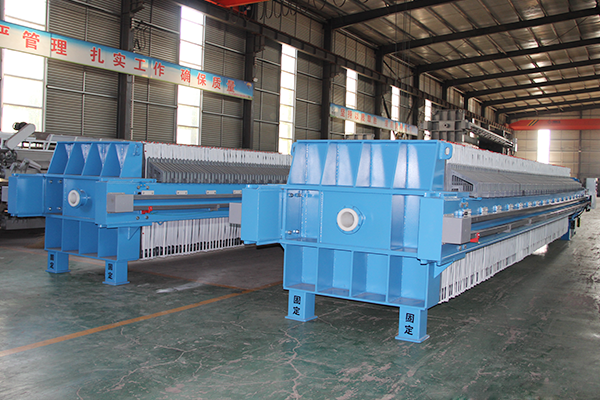
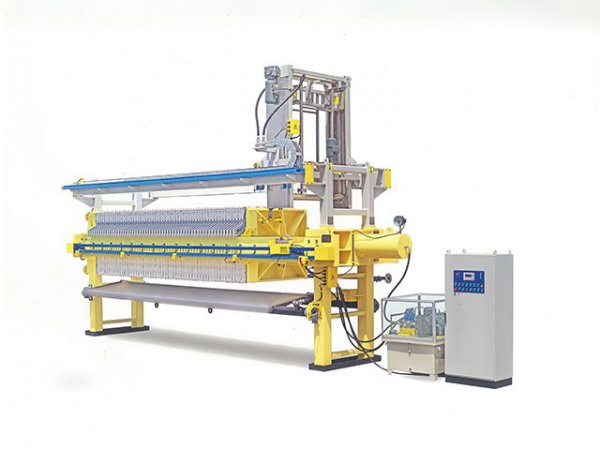
A high-pressure diaphragm filter press is a pressure-driven filtration device designed to separate solids from liquids in slurry mixtures. It uses filter plates equipped with elastic diaphragms (membranes) that can be inflated after the filtration phase.
During operation, slurry is pumped into the press chambers. Solid particles are retained by the filter cloth, while liquid passes through as filtrate. Once the chambers are filled, the diaphragm expands under high pressure, compressing the filter cake further to remove trapped moisture.
Key functions include:
·Efficient solid-liquid separation
·Additional membrane squeezing for low cake moisture
·Stable chamber pressure distribution
·Continuous and repeatable filtration cycles
Because of these features, the high-pressure diaphragm filter press is widely used in industries requiring high dryness and controlled discharge performance.
Core Structural Components
The working principle depends on a carefully engineered structure. Factory-designed components ensure durability and precise pressure control.
Main parts include:
·Frame system – supports the entire press and resists high mechanical loads
·Diaphragm filter plates – contain elastic membranes for secondary squeezing
·Filter cloth – retains solids while allowing filtrate to pass
·Hydraulic system – closes the plates and provides compression force
·Feed pump – delivers slurry into the chambers
·Control system – manages timing, pressure, and cycle automation
From a manufacturer production viewpoint, precision machining and material selection allow diaphragm plates to maintain elasticity and sealing performance over long service periods.
Working Principle Step by Step
Understanding the filtration cycle helps buyers and engineers evaluate performance. The high-pressure diaphragm filter press operates through several controlled stages.
1. Plate Closing
The hydraulic unit pushes the movable head to compress all filter plates together. This creates sealed chambers ready for slurry injection. Proper plate alignment ensures uniform pressure distribution during the cycle.
2. Slurry Feeding
Slurry is pumped into the chambers. Liquid passes through the filter cloth and exits as filtrate, while solids accumulate to form a filter cake inside each chamber.
At this stage, pressure filtration builds the basic cake structure. Flow rate decreases as cake thickness increases.
3. Primary Filtration
As chambers fill, the pressure gradient drives more liquid through the cake layer. The cake acts as a secondary filter medium, improving separation accuracy and clarity of the filtrate.
This stage determines the initial moisture content before membrane compression begins.
4. Diaphragm Squeezing
Once filtration slows, compressed air or water is injected behind the diaphragm membrane. The membrane expands inward, applying high pressure to the cake surface.
This additional compression removes capillary and interstitial water that normal filtration cannot extract. The result is a significantly drier and more compact cake.
The high-pressure diaphragm filter press gains its performance advantage precisely from this membrane squeezing stage.
5. Cake Washing (Optional)
For applications requiring purity, washing liquid can be injected to remove residual contaminants from the cake. The diaphragm structure maintains cake stability during washing.
6. Pressure Release and Cake Discharge
After squeezing, pressure is released, plates separate, and dry cakes fall by gravity. The system then prepares for the next production cycle.
Performance Advantages
Choosing a high-pressure diaphragm filter press offers both technical and economic benefits.
Higher Cake Dryness
Membrane squeezing significantly reduces moisture content compared with standard chamber presses. This lowers transport and disposal costs.
Improved Filtration Efficiency
Shorter cycles and higher pressure utilization improve throughput per hour.
Energy Optimization
By removing more water mechanically, less thermal drying is required in downstream processing.
Operational Stability
Uniform pressure distribution reduces cloth blinding and plate deformation over long-term use.
Factory-Level Consistency
A professional high-pressure diaphragm filter press factory with controlled production systems ensures plate accuracy, sealing reliability, and batch consistency for large installations.
These advantages make diaphragm presses suitable for demanding industrial environments.
Manufacturing and Production Logic
The performance of a high-pressure diaphragm filter press begins at the factory level. Production focuses on mechanical precision, sealing quality, and membrane durability.
Typical production workflow includes:
1.Material selection – high-strength polymers and metal alloys
2.Plate molding and machining – ensuring diaphragm elasticity and chamber geometry
3.Frame fabrication – welding and stress treatment
4.Hydraulic assembly – pressure system integration
5.Control system installation – automation and monitoring
6.Testing and inspection – load, leakage, and cycle simulation
Large-scale manufacturer production lines allow consistent output and predictable delivery schedules for industrial buyers. Factory testing verifies each press before shipment to ensure operational reliability.
Industrial Applications
The high-pressure diaphragm filter press is used wherever efficient dewatering is required.
Common application areas include:
·Wastewater sludge dewatering
·Mining tailings filtration
·Chemical slurry separation
·Metallurgical concentrate recovery
·Ceramic and pigment processing
·Food and pharmaceutical filtration
In each scenario, the diaphragm mechanism enhances cake dryness and process stability, helping projects reduce operating costs and improve production control.
How Buyers Evaluate a Supplier
Selecting a high-pressure diaphragm filter press involves more than comparing prices. Buyers should evaluate production and engineering capabilities.
Key factors include:
·Manufacturer-level factory facilities
·Membrane plate technology
·Hydraulic system reliability
·Automation integration
·Long-term production capacity
·Quality inspection standards
A supplier with integrated production and factory manufacturing strength helps minimize installation risks and supports long-term operational performance.
Conclusion: Building Value with High-Pressure Diaphragm Filter Press Systems
The high-pressure diaphragm filter press represents a major advancement in solid-liquid separation technology. By combining pressure filtration with membrane squeezing, it achieves lower cake moisture, higher efficiency, and improved operational stability.
Backed by professional manufacturer production and factory supply systems, high-pressure diaphragm filter press solutions deliver consistent quality, scalable output, and dependable performance for industrial users.
For projects that demand reliable dewatering, cost control, and high processing accuracy, investing in a well-designed high-pressure diaphragm filter press ensures stronger production results and long-term operational confidence across every filtration cycle.
References
GB/T 7714:Wakeman R J. Separation technologies for sludge dewatering[J]. Journal of hazardous materials, 2007, 144(3): 614-619.
MLA:Wakeman, Richard J. "Separation technologies for sludge dewatering." Journal of hazardous materials 144.3 (2007): 614-619.
APA:Wakeman, R. J. (2007). Separation technologies for sludge dewatering. Journal of hazardous materials, 144(3), 614-619.
 Recommended Products
 Contact us
—— Contact:Manager
—— Tel:+86 16632826789
—— Email:sales@hbscfilterpress.com
—— Url:https://www.hbscfilterpress.com
—— Address:West Zone of Economic Development Zone, Fucheng County, Hengshui City, Hebei Province