
NewsDetails
Filter Press Maintenance Guide: Best Practices for Industrial Equipment
author:grh time:2026-07-14 17:40:57 Click:54
Why Filter Press Maintenance Matters
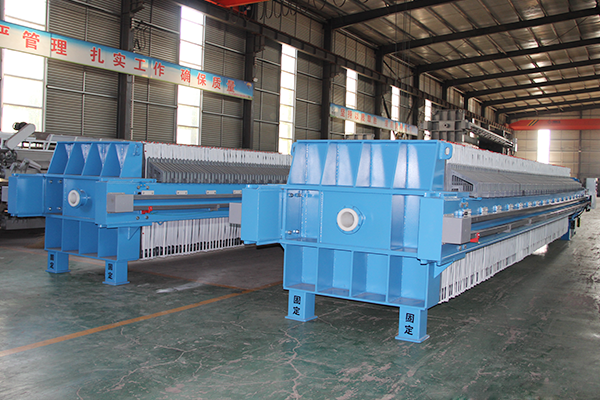
A well-maintained filter press delivers consistent cake moisture, predictable cycle times, and minimal unplanned downtime throughout its service life. Neglected equipment, by contrast, suffers from blinding filter cloths, leaking seals, uneven plate wear, and declining throughput — problems that compound quickly in demanding industrial environments. As a responsible manufacturer, we stress maintenance training during every commissioning visit because operators who truly understand their equipment are the first and most effective line of defense against costly failures and production interruptions.
Daily Inspection Routines
Operator walk-arounds should take no more than fifteen minutes at the start of each production shift. Check hydraulic fluid levels and look for visible leaks around cylinder seals and piping connections. Listen for unusual pump sounds that might indicate cavitation, bearing wear, or impending mechanical failure. Inspect filter cloth condition through the discharge end of the press — any visible tears, excessive stretching, or distortion should trigger immediate replacement of the affected cloth panel before the next filtration cycle begins.
Plate sealing surfaces deserve particular attention during daily inspections. Any score marks, chips, or deformation in the plate edges compromise the sealing face, causing leaks at the plate-to-plate junction that reduce effective filtration area. Our factory recommends replacing damaged plates promptly rather than tolerating leakage that reduces equipment efficiency and contaminates the filtrate stream with solids that should remain in the cake.
Weekly and Monthly Maintenance Tasks
Hydraulic system maintenance is typically weekly work that should be performed without exception. Change hydraulic filters according to the manufacturer maintenance schedule — usually every five hundred operating hours or three months, whichever comes first. Inspect the hydraulic cylinder for scoring on the piston rod surface and verify that all connections remain tight. Our supplier recommends annual sampling and laboratory analysis of hydraulic fluid for moisture content and particulate contamination, with fluid replacement if results exceed acceptable limits.
Plate pack cleaning is a monthly necessity in most industrial applications. High-pressure water washing removes accumulated solids from plate channels and prevents bacterial growth in moist environments. For chemical process applications, use only manufacturer-approved cleaning agents that will not degrade plate materials or filter cloth fibers. Our factory supplies compatibility guides and recommended cleaning procedures for all common processing chemistries as part of our standard technical documentation package.
Filter Cloth Care and Replacement
Filter cloth is the consumable element that most directly affects filtrate quality and process consistency. Cloth selection should match the particle size distribution of the slurry — too fine a weave blinds quickly and shortens cycles, while too coarse a weave allows fine solids to penetrate and contaminate the filtrate stream. Our manufacturer supplies cloths in woven monofilament, multifilament, and needlefelt constructions to cover every application range from coarse mineral dewatering to precision chemical clarification.
Proper cloth installation requires tensioning each panel evenly across the plate surface. Uneven tension creates wrinkles that become collection points for solids accumulation and create bypass pathways for leakage around the seal. Our factory-trained technicians demonstrate correct cloth installation during commissioning, and we provide illustrated installation guides with every replacement cloth order from our supplier catalog to ensure maintenance teams follow proper procedures.
Predicting and Preventing Common Failures
Hydraulic system failures typically announce themselves gradually through warning signs rather than sudden catastrophic events. Increasing leak rates around seals, sluggish cylinder response, and unusual pump noise all precede catastrophic seal failure. Installing pressure gauges on both sides of the hydraulic cylinder makes it easy to spot declining clamping force before it causes operational problems. Our manufacturer recommends logging cylinder clamping pressure at the start of every shift as standard operating procedure.
Plate cracking in polypropylene plates results from thermal cycling and chemical stress over extended operating periods. Inspect plates regularly for hairline fractures, particularly around feed ports where mechanical stress concentrations are highest. Our factory quality tests every new plate to pressures substantially exceeding normal operating conditions, providing confidence in structural integrity. Replacement plates from our supplier stock carry the same quality assurance backing as original factory production — no second-tier quality for replacement components.
Training Your Maintenance Team
Even the best equipment fails prematurely if operators lack understanding of its function and maintenance requirements. We recommend formal training for all maintenance personnel covering hydraulic circuit fundamentals, plate handling safety, cloth installation technique, and emergency shutdown procedures. Our manufacturer offers both on-site training during equipment commissioning and periodic refresher courses at regional distributor facilities to maintain skill levels across your operations team.
We invite global distributors to join our service network as authorized maintenance providers. As a factory-backed supplier, we provide comprehensive technical training in multiple languages, detailed maintenance documentation, and priority spare parts fulfillment for our distribution partners. Building a local service capability through a trusted distributor benefits end customers who value responsive local support over distant factory contacts. We actively support our distribution partners with marketing materials and technical certification programs.
References
Sources: Sutherland, K. — Filters and Filtration Handbook, Elsevier Science; WEF (Water Environment Federation) — Operation of Water Resource Recovery Facilities, Manual of Practice No. 11; Coulson, J.M. & Richardson, J.F. — Chemical Engineering Design, Elsevier Butterworth-Heinemann; ASME — Pump and Compressor Maintenance Standards, American Society of Mechanical Engineers.
 Recommended Products
 Contact us
—— Contact:Manager
—— Tel:+86 16632826789
—— Email:sales@hbscfilterpress.com
—— Url:https://www.hbscfilterpress.com
—— Address:West Zone of Economic Development Zone, Fucheng County, Hengshui City, Hebei Province