
NewsDetails
Automatic vs. Manual Filter Press: Which Configuration Is Right for Your Operation?
author:grh time:2026-08-13 16:06:59 Click:144
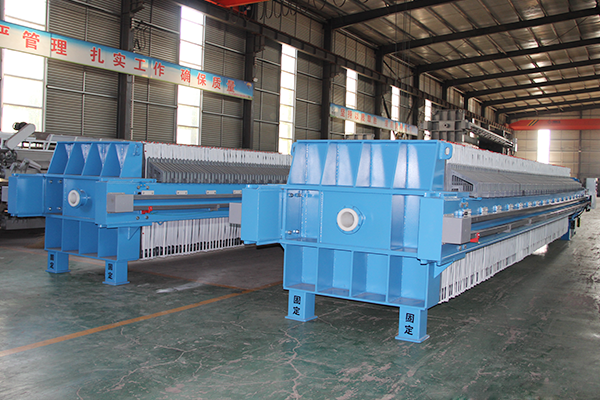
One of the first decisions every filter press buyer faces is how much automation to specify. At one end of the spectrum is the fully manual press, where the operator physically closes the plate pack, monitors the cycle, and removes each plate individually during discharge. At the other end is the fully automatic press, which executes the entire filtration cycle —closing, feeding, filtering, dewatering, opening, plate shifting, and cloth washing —with minimal human input. Between these extremes lies a range of semiautomatic configurations, each offering different trade-offs between cost, labor requirements, and operational control.
What Does Manual Operation Actually Involve?
A manual filter press requires the operator to perform every step of the process. Closing the press typically involves cranking a hand wheel or operating a manual hydraulic pump to bring the plates together and clamp them shut. During filtration, the operator monitors the pressure gauge and feed flow to judge when the cycle is complete. At discharge, the operator releases the clamping pressure, separates each plate manually —often using a prying tool —and tips or shakes the plate to dislodge the filter cake.
This level of involvement is manageable for small presses with few plates, infrequent operation, or batch sizes that fit within a single operator's workload. Manual presses are inexpensive to purchase and straightforward to maintain —there are no PLCs to program, no solenoid valves to troubleshoot, and no sensors to calibrate. For a small ceramics studio processing a few batches per week, or a university laboratory testing slurries, a manual press is perfectly adequate.
However, manual operation has real limitations in production environments. The physical effort of plate separation —particularly with large plates above 800mm —is significant and poses ergonomic risks with repetitive operation. Human judgment in cycle termination introduces variability; one operator may end the cycle at 10 bar while another, perhaps eager to move to the next task, releases at 8 bar. And the time commitment is substantial: a manual press with 50 plates might require 20 to 30 minutes just for opening and discharge, time during which the press is not producing.
Semiautomatic Configurations: A Practical Middle Ground
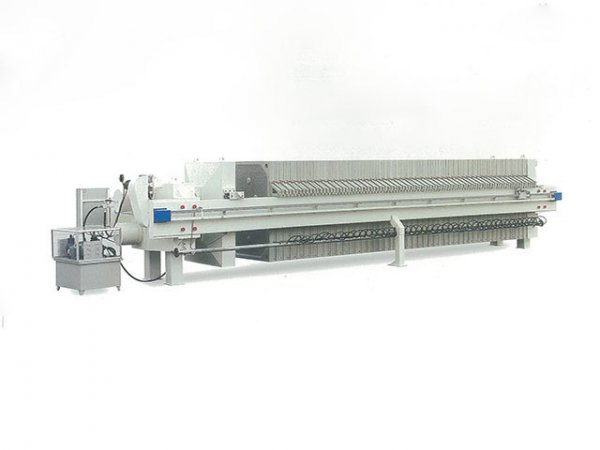
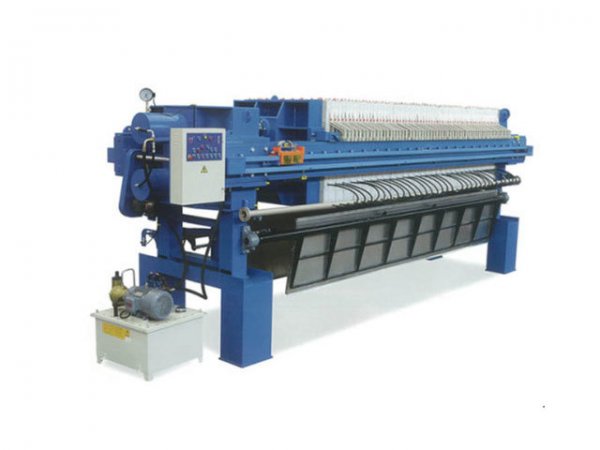
Most modern filter presses fall somewhere between fully manual and fully automatic, offering hydraulic closing with some degree of assisted opening. A typical semiautomatic press uses a hydraulic cylinder —powered by an electric pump —to close the plate pack, automatically clamping to the set pressure. Opening, however, is still done manually or with partial mechanical assistance.
This configuration eliminates the most labor-intensive step —the physical effort of closing —while keeping the overall machine complexity manageable. Semiautomatic presses are common in mid-scale operations where throughput is important but not so high that every minute of operator time must be optimized. They offer a good balance of capital cost, maintenance simplicity, and operational improvement over purely manual designs.
Some semiautomatic presses include automatic plate shifters —a mechanical device that separates each plate by a set distance after the clamping force is released. This alone dramatically reduces discharge time and operator effort, though the operator still needs to remove the cake from each plate face. Plate shifters are a worthwhile upgrade even if full automation is not in the budget.
Fully Automatic Filter Presses: Maximum Throughput, Minimum Labor
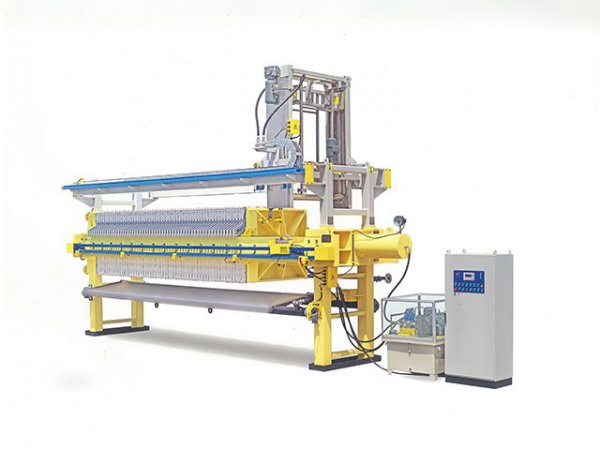
A fully automatic filter press takes over the entire process cycle through programmable logic controller (PLC) management. The typical automated sequence is:
The PLC initiates the closing sequence, driving the hydraulic cylinder to the fully closed position and building clamping pressure.
The feed pump starts and slurry enters the chambers. The PLC monitors pressure and flow, ending the feed phase when a set pressure or time threshold is reached.
For membrane presses, the PLC activates the squeeze cycle —inflating the membrane plates with compressed air at the specified pressure.
The press opens automatically. The plate shifting mechanism moves plates apart sequentially, and built-in vibrators or shakers help dislodge the filter cake.
An automatic cloth washing system sprays high-pressure water across the cloth surfaces between cycles.
The PLC logs cycle data —pressure, time, throughput —for quality records and process optimization.
The advantages of full automation extend well beyond labor savings. Cycle consistency improves dramatically because the PLC executes exactly the same sequence every time, removing the variability introduced by different operators or operator fatigue. Filtration data logging supports quality control and regulatory compliance. And in hazardous environments, automation reduces operator exposure to process materials, high pressures, and moving machinery.
Evaluating the Cost-Benefit Equation
The capital cost premium for full automation over a manual press of equivalent size typically ranges from 40 to 80 percent, sometimes more for presses with advanced features like automatic cloth washing or remote monitoring. This is not trivial, but it must be weighed against the total cost of ownership over the equipment's lifespan.
Labor cost analysis is the starting point. If a manual press requires one operator for 6 hours per day, and automation reduces that to 1.5 hours of supervision and inspection, the labor saving is substantial —especially in regions with high wages. Over a five-year period, these savings often exceed the automation premium. Add in the value of consistent cycle performance, reduced product variability, and fewer operator-induced errors, and the economic case for automation becomes compelling in many production environments.
The calculation is less favorable in low-volume operations where the press runs only a few cycles per week. The automation premium may take 15 or 20 years to recover through labor savings —longer than the press's practical service life. In these situations, a semiautomatic configuration or even a well-maintained manual press makes more financial sense.
Maintenance Considerations Across Configurations
Automation brings maintenance complexity. PLCs require programming backups and occasional firmware updates. Solenoid valves, pressure transducers, and proximity sensors are all potential failure points that need diagnostic capability and spare parts. If your maintenance team lacks experience with programmable controllers and industrial instrumentation, factor in training costs or the expense of a service contract with the manufacturer.
Manual presses, by contrast, are nearly pure mechanical and hydraulic systems. A maintenance technician familiar with basic hydraulic equipment can diagnose and repair most issues without specialized knowledge. This simplicity is a genuine advantage in facilities where maintenance expertise is limited or where critical spare parts need to be kept on hand for rapid response.
Making the Decision for Your Facility
Consider these questions as a framework for the decision: How many cycles per day does the press run? If it is more than 5 to 8, automation is likely worth serious evaluation. How many plates are in the press? Above 30 to 40 plates, manual discharge becomes genuinely arduous. What is the operating environment? Hazardous or sterile environments push strongly toward automation. What is your available maintenance capability? Simpler systems suit lean maintenance teams. What is your labor cost per hour, and how many hours per week does the operator currently spend on the press? Run the numbers before deciding.
For most production-scale operations processing 20 or more batches per week, the answer increasingly points toward at least semiautomatic operation, with full automation justified where labor costs are high, process consistency is critical, or operator safety concerns are present. Work with your filter press supplier to model the total cost of ownership across configurations —the numbers often tell a clearer story than general guidelines alone.
References:
Perry's Chemical Engineers' Handbook, 9th Edition, McGraw-Hill Education
Industrial Filter Media Handbook, Filtration + Separation Magazine
Water Environment Federation —WEF Manual of Practice No. 8
ISO 1219-1:2016 —Fluid Power Systems and Components —Graphic Symbols
 Recommended Products
 Contact us
—— Contact:Manager
—— Tel:+86 16632826789
—— Email:sales@hbscfilterpress.com
—— Url:https://www.hbscfilterpress.com
—— Address:West Zone of Economic Development Zone, Fucheng County, Hengshui City, Hebei Province