
NewsDetails
Complete Filtration Cycle Explained: Inside a Chamber Filter Press
author:Shuangcheng time:2026-02-01 18:23:34 Click:199
Understanding the Value of a Chamber Filter Press
In modern solid-liquid separation, efficiency, consistency, and automation are critical for industrial operations. From wastewater treatment to mining and chemical processing, filtration systems must handle high loads while delivering stable cake discharge. This is where the Chamber Filter Press becomes an essential solution.
A professional Chamber Filter Press manufacturer with advanced production and factory capacity can deliver reliable equipment designed for continuous industrial use. Understanding the full filtration cycle helps engineers, buyers, and operators improve performance, reduce downtime, and control operational costs.
This article explains the complete filtration cycle inside a Chamber Filter Press, including structure, working stages, performance advantages, and how factory-level production ensures consistent quality for large-scale applications.
What Is a Chamber Filter Press?
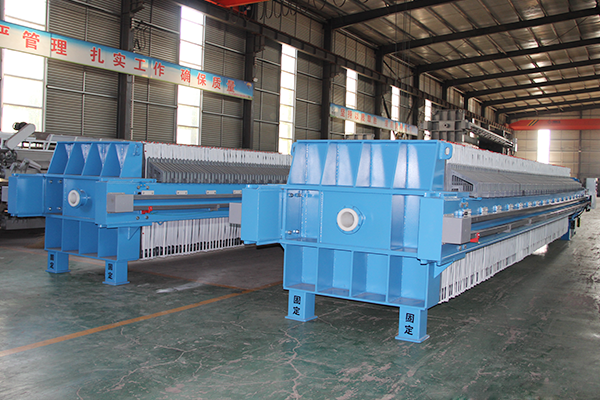
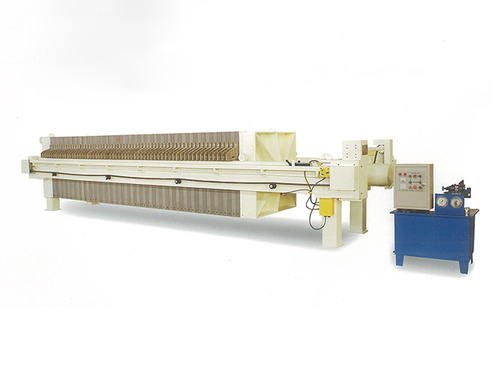
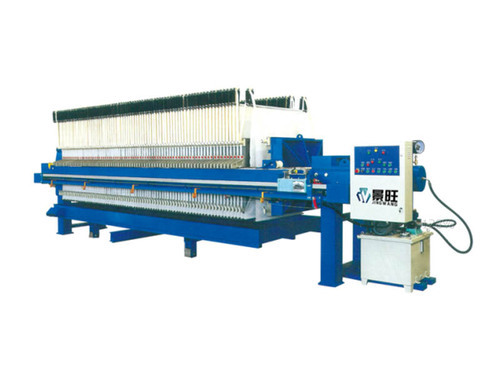
A Chamber Filter Press is a mechanical filtration system used to separate solids from liquids by pressure-driven filtration. It consists of a series of recessed plates that form chambers where slurry is pumped and dewatered under controlled pressure.
Unlike gravity filtration, chamber filtration uses mechanical force to accelerate liquid removal, producing compact and dry filter cake. Because of this, Chamber Filter Press systems are widely used in:
·Wastewater and sludge treatment
·Mining and mineral processing
·Chemical and pharmaceutical filtration
·Food and beverage clarification
·Industrial slurry dewatering
From a manufacturer production perspective, the press frame, hydraulic system, filter plates, and control units are all engineered inside the factory to handle long-term pressure cycles and high-volume operation.
Core Structure of a Chamber Filter Press
Before explaining the cycle, it is important to understand the basic structure built through factory manufacturing.
Key components include:
·Filter plates forming enclosed chambers
·Hydraulic closing system for sealing pressure
·Feed pump inlet for slurry injection
·Filtrate outlets for liquid discharge
·Cake discharge area for solids removal
·Control system for automation
Each part is assembled under controlled manufacturer production standards to ensure dimensional accuracy and sealing reliability. Factory precision directly affects filtration efficiency and cycle stability.
The Complete Filtration Cycle Explained
The strength of a Chamber Filter Press lies in its clearly defined working stages. Each stage supports stable separation and repeatable production output.
Stage 1: Plate Closing and Sealing
The filtration cycle begins with the hydraulic system closing the filter plates tightly together. High pressure is applied to ensure proper sealing between each chamber.
Factory-manufactured frames and hydraulic cylinders ensure uniform pressure distribution, preventing leakage and uneven cake formation. Proper closure protects the entire Chamber Filter Press during high-pressure operation.
Stage 2: Slurry Feeding
Once sealed, slurry is pumped into the chambers through the feed inlet. The suspension spreads evenly across the filter chambers.
As pressure increases, liquid passes through the filter cloth while solids remain trapped inside. Production-grade inlet channels and internal flow design improve feeding speed and reduce turbulence.
A reliable Chamber Filter Press manufacturer optimizes feed distribution during factory production to minimize cycle time and improve cake uniformity.
Stage 3: Filtration and Cake Formation
During this stage, pressure forces liquid through the filter media. Solids gradually accumulate on the cloth surface, forming the filter cake.
The thickness and moisture of the cake depend on:
·Slurry properties
·Filtration pressure
·Cloth permeability
·Chamber depth
Factory-designed chambers allow consistent cake growth, ensuring stable output across repeated cycles. Production precision improves both dryness and discharge behavior.
Stage 4: Washing (Optional)
Some industrial applications require cake washing to remove residual chemicals or contaminants. Clean liquid is introduced to flush through the formed cake.
This improves product purity and reduces downstream processing costs. Manufacturer-level production designs include washing channels integrated into the plate structure to maintain even distribution.
Not all applications need this step, but for chemical and pharmaceutical filtration, it greatly improves quality.
Stage 5: Air Drying or Squeezing
After filtration, air or membrane pressure can be applied to further reduce moisture. This step increases cake dryness and lowers transportation weight.
High-performance Chamber Filter Press production systems integrate air blow and squeezing features inside the factory, giving operators flexibility to adjust final cake condition.
Stage 6: Plate Opening and Cake Discharge
Once filtration is complete, hydraulic pressure releases and the plates separate. The dry sludge cake falls automatically by gravity or assisted vibration.
Smooth plate surfaces and accurate factory machining prevent sticking and reduce manual cleaning time. This improves overall production efficiency and cycle continuity.
Stage 7: Cloth Cleaning and Reset
Finally, filter cloths may be cleaned with water sprays before the next cycle begins. This restores permeability and extends cloth life.
Automated cloth washing systems are commonly integrated during Chamber Filter Press factory manufacturing for long-term operational stability.
Advantages of Chamber Filter Press Systems
The Chamber Filter Press offers several production and operational benefits for industrial users.
Key advantages include:
·High solid capture efficiency
·Compact and dry cake output
·Low operating moisture
·Flexible automation options
·Stable continuous production
·Reduced transport and disposal costs
From a manufacturer and factory supply standpoint, Chamber Filter Press equipment is scalable for both small batch processing and large-volume industrial production lines.
Manufacturing and Production Quality Control
Reliable filtration performance depends on professional factory manufacturing. A Chamber Filter Press manufacturer focuses on:
·Precision frame welding
·Hydraulic system testing
·Plate mold accuracy
·Seal pressure verification
·Automation calibration
During production, each Chamber Filter Press is tested for pressure resistance and cycle stability before delivery. Factory quality control ensures that equipment performs consistently under continuous industrial loads.
Stable production also allows manufacturers to support batch supply for large projects without sacrificing dimensional consistency.
Applications Across Industries
Chamber Filter Press solutions are widely adopted across multiple sectors:
·Municipal wastewater treatment
·Mining tailings management
·Chemical slurry separation
·Food processing clarification
·Pharmaceutical solid-liquid separation
·Environmental protection projects
With strong factory production capability, Chamber Filter Press systems can be customized for specific slurry properties and process requirements.
Conclusion: Optimizing Filtration with Chamber Filter Press Technology
Understanding the complete filtration cycle inside a Chamber Filter Press allows operators and buyers to improve separation efficiency, reduce downtime, and optimize production output.
From plate sealing and slurry feeding to cake formation and discharge, every step relies on precision engineering and reliable factory manufacturing. A professional Chamber Filter Press manufacturer with stable production and factory supply capacity ensures consistent quality, scalable delivery, and long-term operational reliability.
For industrial projects that demand efficient solid-liquid separation, investing in a high-quality Chamber Filter Press system supported by manufacturer-level production expertise is a strategic decision that delivers both performance and cost advantages over the long term.
References
GB/T 7714:Wakeman R, Tarleton E S. Solid/liquid separation: principles of industrial filtration[M]. Elsevier, 2005.
MLA:Wakeman, Richard, and E. Steve Tarleton. Solid/liquid separation: principles of industrial filtration. Elsevier, 2005.
APA:Wakeman, R., & Tarleton, E. S. (2005). Solid/liquid separation: principles of industrial filtration. Elsevier.
 Recommended Products
 Contact us
—— Contact:Manager
—— Tel:+86 16632826789
—— Email:sales@hbscfilterpress.com
—— Url:https://www.hbscfilterpress.com
—— Address:West Zone of Economic Development Zone, Fucheng County, Hengshui City, Hebei Province