
NewsDetails
Filter Press Plate Materials and Selection Guide
author:grh time:2026-06-11 20:24:54 Click:93
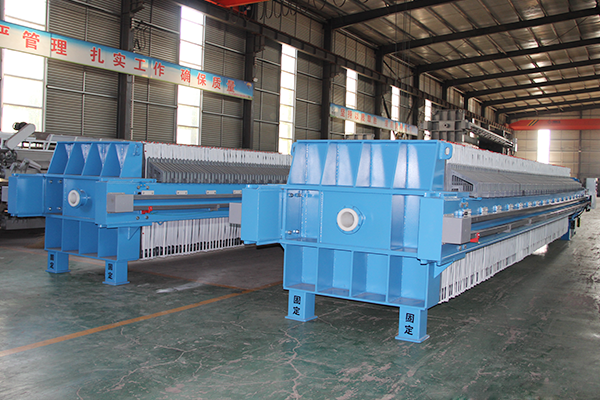
Filter press plates form the core of every filter press system, creating the chambers where solid-liquid separation occurs and providing drainage surfaces that collect filtrate. The material composition of these plates directly affects equipment performance, service life, maintenance requirements, and process compatibility. Selecting appropriate plate materials ensures reliable operation across diverse industrial environments.
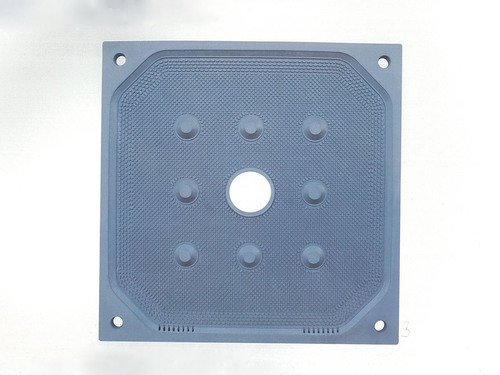
Polypropylene Filter Plates
Polypropylene (PP) has become the dominant material for filter press plates across most industrial applications. PP plates offer excellent chemical resistance to acids, alkalis, and many solvents, making them suitable for chemical processing, mining, and wastewater treatment applications. Their lightweight nature simplifies handling during installation and maintenance while reducing structural requirements on filter press frames.
Professional polypropylene filter plate manufacturers produce plates using precision molding processes that ensure dimensional accuracy, smooth drainage surfaces, and consistent chamber volumes. They incorporate reinforcing fillers and fibers that enhance mechanical strength without compromising chemical resistance, producing plates that withstand operating pressures of 15-25 bar reliably.
Cast Iron Filter Plates
Cast iron plates serve applications requiring high structural rigidity and thermal stability. Their dimensional stability under pressure ensures consistent chamber sealing and uniform cake formation. Cast iron also withstands elevated temperatures that would soften polypropylene plates, making it suitable for hot filtration processes in chemical and petrochemical operations.
Leading cast iron filter plate suppliers machine their plates to tight tolerances with precision-ground sealing surfaces that prevent leakage during high-pressure operation. They apply protective coatings or surface treatments that enhance corrosion resistance while maintaining the dimensional stability that cast iron provides.
Stainless Steel Filter Plates
Stainless steel plates excel in applications demanding strict hygiene, corrosion resistance, and regulatory compliance. Food and beverage processing, pharmaceutical manufacturing, and fine chemical production commonly specify stainless steel plates for their inert surface characteristics, cleanability, and compliance with sanitary design standards.
Experienced stainless steel filter plate manufacturers fabricate plates from grades 304 and 316L stainless steel with polished surfaces that facilitate cleaning and prevent product contamination. They provide material test reports and compliance documentation required for food contact and pharmaceutical applications.
Membrane Plate Construction
Membrane (diaphragm) plates combine a rigid support core with a flexible elastomeric diaphragm that inflates to squeeze filter cakes. The support core can be polypropylene, ductile iron, or stainless steel, while diaphragm materials include natural rubber, EPDM, nitrile rubber, and specialty elastomers. The bond between core and diaphragm must withstand thousands of inflation cycles without delamination.
Quality-focused membrane plate factories employ specialized bonding processes that create permanent chemical or mechanical bonds between diaphragm and core materials. They test bond integrity through accelerated cycle testing that simulates years of service, ensuring membrane plates deliver reliable squeeze performance throughout their rated service life.
Recessed vs Flat Plate Profiles
Recessed plates (chamber plates) have cavities that form filtration chambers when two plates close together. Flat plates work with separate frames in plate-and-frame configurations. Recessed plates are simpler to operate and dominate bulk filtration applications. Flat plates offer superior cake washing and easier cloth replacement for specialized applications.
Reputable filter plate suppliers offer both recessed and flat plate profiles in various materials and sizes. They provide technical guidance for selecting the appropriate plate profile based on filtration requirements, cake washing needs, and operating preferences specific to each application.
Plate Sizing and Capacity Considerations
Filter press capacity depends on plate size, chamber depth, and number of chambers in the plate pack. Common plate sizes range from 400mm × 400mm for small installations to 2000mm × 2000mm for large industrial applications. Chamber depth typically ranges from 20mm to 50mm, with deeper chambers producing thicker cakes but requiring longer filtration cycles.
Established filter press plate manufacturers provide comprehensive sizing tools and engineering support to help customers select plate dimensions and chamber configurations that match throughput requirements, available floor space, and budget constraints. Their expertise ensures equipment sizing that delivers optimal performance without overinvestment.
Making Informed Plate Material Decisions
Filter press plate material selection requires evaluating chemical compatibility, temperature requirements, structural demands, regulatory compliance, and lifecycle economics. Engage experienced manufacturers early in the specification process, provide complete process condition information, and request material recommendations supported by documented compatibility data for your specific application environment.
Filter press plate material selection profoundly affects equipment performance, longevity, and total cost of ownership. By understanding material options and their application suitability, engineers can specify plate systems that deliver reliable, efficient filtration across diverse industrial processes.
References
American Society for Testing and Materials (ASTM) - ASTM Test Methods for Polymer and Metal Performance
American Filtration and Separation Society (AFS) - Filter Media and Plate Selection Guide
Perry's Chemical Engineers' Handbook - Filtration Equipment Selection, McGraw-Hill
 Recommended Products
 Contact us
—— Contact:Manager
—— Tel:+86 16632826789
—— Email:sales@hbscfilterpress.com
—— Url:https://www.hbscfilterpress.com
—— Address:West Zone of Economic Development Zone, Fucheng County, Hengshui City, Hebei Province