
NewsDetails
Managing Sludge Cake from Hydraulic Filter Press
author:Shuangcheng time:2026-01-29 18:09:06 Click:122
Why Hydraulic Filter Press Sludge Cake Management Matters
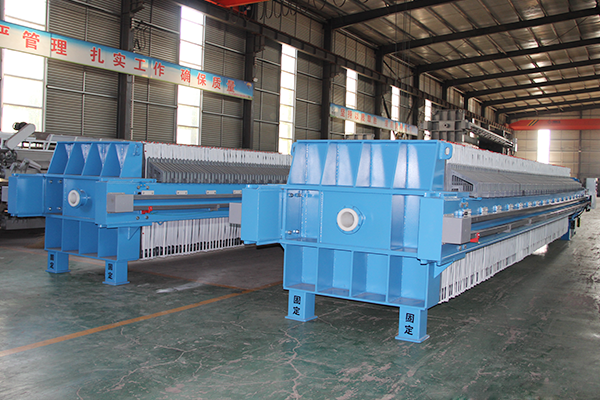
In industrial wastewater treatment, mining, chemical processing, and municipal applications, dewatering is a critical step for reducing waste volume and improving handling efficiency. One of the most effective technologies for this task is the Hydraulic Filter Press, which separates liquid from solids to form a compact sludge cake.
Proper management of Hydraulic Filter Press sludge cake is not only about disposal. It directly affects transportation costs, environmental compliance, and downstream reuse possibilities. For projects operating at scale, working with a professional Hydraulic Filter Press manufacturer with stable production and factory supply capability ensures consistent dewatering performance and predictable output quality.
This article explains what sludge cake is, how it is formed in a hydraulic filter press, how factory-level production improves efficiency, and how operators can manage sludge cake safely and economically across industrial operations.
What Is Sludge Cake in a Hydraulic Filter Press?
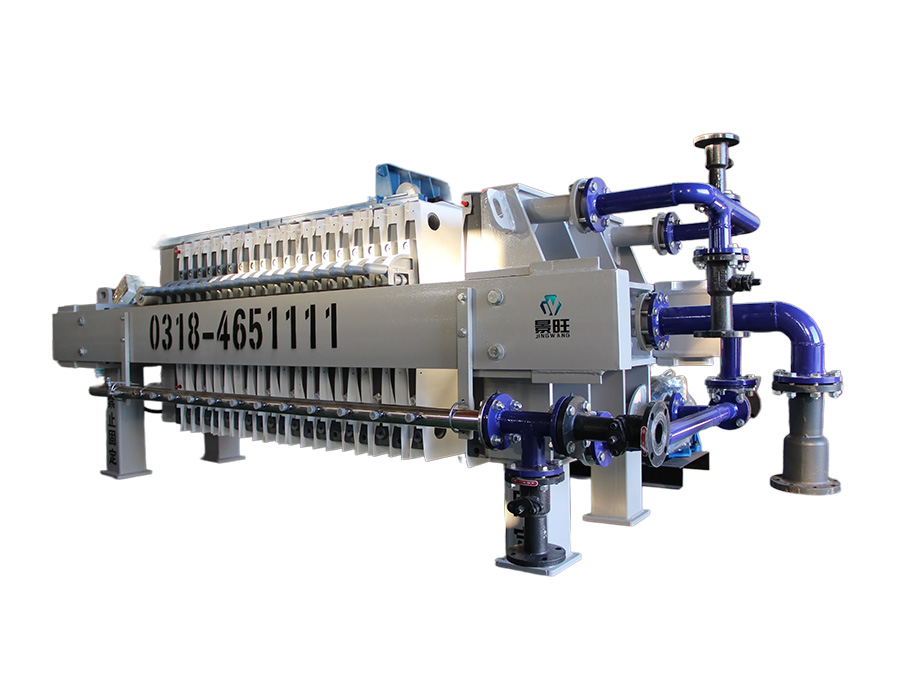
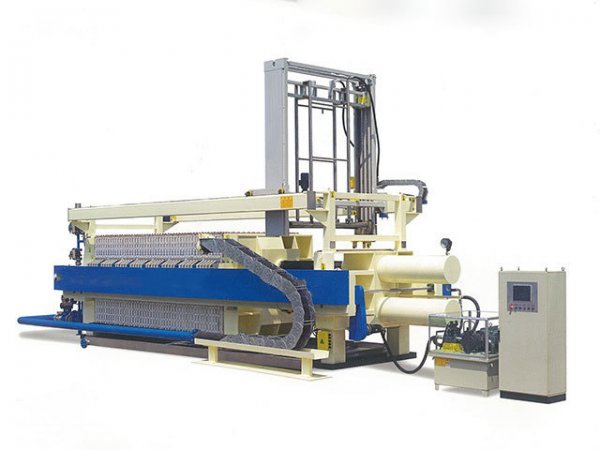
Sludge cake is the solid material remaining after slurry or wastewater is processed through a hydraulic filter press. During filtration, liquid passes through filter cloths while solids are retained and compressed into dense layers between plates.
A Hydraulic Filter Press sludge cake typically contains:
·Concentrated suspended solids
·Reduced moisture content
·Stable physical structure
·Lower transport volume compared to raw sludge
The hydraulic system applies uniform pressure across filter plates, allowing the sludge particles to consolidate efficiently. Compared with gravity settling, hydraulic pressing produces much drier, easier-to-handle sludge cake.
From a manufacturer production viewpoint, plate design, hydraulic force stability, and filtration surface quality directly determine final cake thickness and moisture percentage.
Working Principle of Hydraulic Filter Press Dewatering
Understanding how a hydraulic filter press forms sludge cake helps operators optimize performance.
Key operating stages include:
1.Slurry feeding – slurry enters the press chambers
2.Filtration phase – liquid passes through filter cloths
3.Hydraulic compression – pressure consolidates solids
4.Cake formation – moisture is expelled from sludge
5.Plate opening and discharge – finished sludge cake is released
Hydraulic cylinders generate closing force that keeps plates sealed during filtration. This ensures stable pressure distribution and prevents leakage, which is critical for forming uniform Hydraulic Filter Press sludge cake.
In factory-produced systems, automation improves timing, pressure control, and repeatability for continuous production environments.
Characteristics of High-Quality Sludge Cake
Not all sludge cake is equal. Proper design and operation lead to better cake quality and easier downstream handling.
Important sludge cake characteristics include:
·Low moisture content for reduced weight
·Consistent thickness for uniform discharge
·Structural stability for transport
·Reduced odor and free water
·Safe stackability
A professional Hydraulic Filter Press factory with production engineering capability focuses on plate geometry, cloth permeability, and hydraulic control to ensure stable cake formation across large batch operations.
Better cake quality lowers landfill costs, improves potential reuse, and simplifies logistics management.
Sludge Cake Handling and Storage Strategies
Once sludge cake exits the press, correct handling methods are essential to maintain efficiency and environmental safety.
Common handling methods include:
·Conveyor belt transport
·Screw feeder systems
·Collection bins
·Containerized storage
·Direct truck loading
For short-term storage, sludge cake should be kept on impermeable surfaces to prevent leachate infiltration. Covered areas reduce moisture reabsorption and odor release.
From a production and factory supply perspective, integrated discharge systems reduce manual labor and improve plant safety when managing high volumes of Hydraulic Filter Press sludge cake.
Disposal and Reuse Options for Sludge Cake
After dewatering, sludge cake may be treated as waste or reused depending on composition and regulatory requirements.
Typical disposal and reuse paths include:
·Landfill disposal
·Cement kiln co-processing
·Soil stabilization material
·Brick and construction additive
·Composting (for organic sludge)
Properly dewatered Hydraulic Filter Press sludge cake reduces transportation frequency and lowers overall disposal costs. In some industrial applications, dried sludge cake can become a secondary raw material, improving sustainability metrics.
Factory-level consistency in cake dryness helps ensure compliance with local environmental regulations and reuse standards.
Improving Sludge Cake Performance Through Production Design
Sludge cake quality is influenced not only by operation but also by equipment design and manufacturing precision.
Production-driven improvements include:
·Optimized plate structure
·Uniform hydraulic pressure distribution
·High-quality filter cloth integration
·Automated control systems
·Batch consistency management
A reliable Hydraulic Filter Press manufacturer with advanced production facilities ensures each press performs consistently across long-term operation cycles.
Stable production engineering allows operators to control cake moisture, thickness, and discharge efficiency without excessive trial and error on-site.
Quality Control in Hydraulic Filter Press Manufacturing
Factory quality control plays a major role in sludge cake management success.
Key inspection areas include:
·Hydraulic system testing
·Plate sealing verification
·Pressure endurance checks
·Filtration performance simulation
·Automation reliability testing
Through factory inspection, manufacturers reduce operational risk and help end users maintain continuous sludge cake production without unexpected downtime.
This production-focused approach improves both economic and environmental performance for facilities handling large sludge volumes.
Choosing the Right Hydraulic Filter Press Supplier
When selecting equipment for sludge cake management, buyers should prioritize production capability over simple pricing.
Evaluation criteria include:
·Manufacturer-level factory facilities
·Stable production capacity
·Engineering support
·Quality inspection standards
·Long-term supply and service capability
A supplier with integrated factory manufacturing and production control ensures your Hydraulic Filter Press sludge cake system performs reliably throughout the entire project lifecycle.
Choosing a professional production partner minimizes operating risk and improves return on investment.
Conclusion: Optimizing Hydraulic Filter Press Sludge Cake Management
Effective management of Hydraulic Filter Press sludge cake is essential for modern industrial and municipal operations. By understanding dewatering principles, handling methods, disposal pathways, and production design, operators can significantly reduce waste volume and improve process efficiency.
Backed by professional manufacturer production and factory supply capability, hydraulic filter press systems deliver consistent sludge cake quality, reliable discharge, and scalable performance for large projects.
For facilities seeking better environmental compliance, lower transport costs, and stronger operational stability, investing in well-produced Hydraulic Filter Press solutions ensures long-term success from dewatering to final sludge cake utilization.
References
GB/T 7714:Novak J T, Sadler M E, Murthy S N. Mechanisms of floc destruction during anaerobic and aerobic digestion and the effect on conditioning and dewatering of biosolids[J]. Water Research, 2003, 37(13): 3136-3144.
MLA:Novak, John T., Mary E. Sadler, and Sudhir N. Murthy. "Mechanisms of floc destruction during anaerobic and aerobic digestion and the effect on conditioning and dewatering of biosolids." Water Research 37.13 (2003): 3136-3144.
APA:Novak, J. T., Sadler, M. E., & Murthy, S. N. (2003). Mechanisms of floc destruction during anaerobic and aerobic digestion and the effect on conditioning and dewatering of biosolids. Water Research, 37(13), 3136-3144.
 Recommended Products
 Contact us
—— Contact:Manager
—— Tel:+86 16632826789
—— Email:sales@hbscfilterpress.com
—— Url:https://www.hbscfilterpress.com
—— Address:West Zone of Economic Development Zone, Fucheng County, Hengshui City, Hebei Province