
NewsDetails
How to Size a Filter Press for Your Application
author:grh time:2026-11-15 16:43:14 Click:0
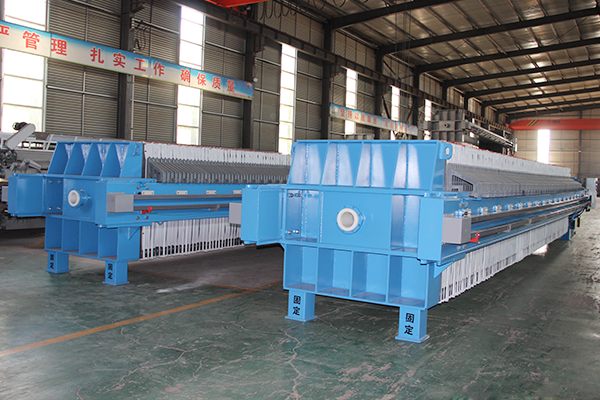
Sizing a filter press correctly is essential for achieving optimal filtration performance and avoiding costly over- or under-design. A press that is too small will be overworked and unable to keep up with production. A press that is too large wastes capital, increases operating costs, and may actually perform worse due to poor filter cake formation in oversized chambers. This comprehensive guide walks through the step-by-step process of sizing a filter press, from understanding your slurry characteristics to calculating the required filtration area, plate count, and cycle time.
What Is Filter Press Sizing?
Filter press sizing is the process of determining the correct press dimensions, plate size, number of plates, and cycle parameters to handle your specific slurry volume and solids loading. The goal is to achieve the desired filtration throughput within acceptable cycle times, while producing a filter cake with the target moisture content.
Getting the sizing right is critical because filter presses are capital-intensive equipment. An oversized press ties up capital that could be used elsewhere. An undersized press becomes a production bottleneck, requiring overtime or backup equipment to keep up. Proper sizing ensures the press runs at its design capacity with room for future production growth.
Key Parameters You Need to Know
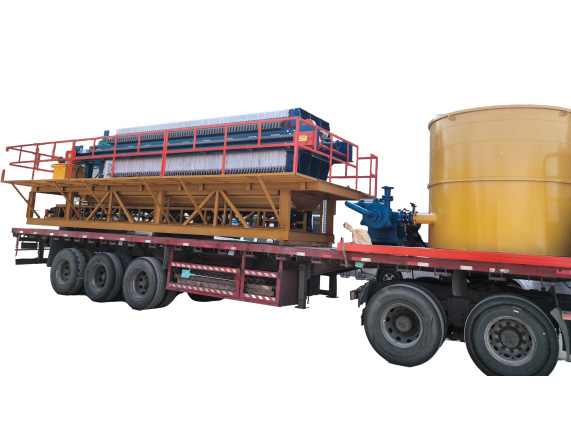
Before you can size a filter press, you need to gather the following information about your process:
- Daily slurry volume: How many cubic meters or gallons of slurry do you need to process per day?
- Solids concentration: What percentage of the slurry is solids (by weight or volume)?
- Specific gravity of solids: How dense are the solids? This affects filter cake volume calculations.
- Target filter cake moisture: What moisture content do you need for disposal or downstream processing?
- Filtration resistance: How fast does your slurry filter? This determines required cycle time.
- Operating hours: How many hours per day can the press run? This affects throughput calculations.
Step 1: Calculate Daily Dry Solids
The first step is to determine how much dry solids you need to handle each day. Use this formula:
Dry Solids (kg/day) = Slurry Volume (m³/day) × Slurry Density (kg/m³) × Solids Concentration (%)
For example: 100 m³/day slurry × 1050 kg/m³ × 2% solids = 2100 kg dry solids per day.
Step 2: Calculate Cake Volume per Day
Next, convert dry solids to filter cake volume, accounting for the target filter cake moisture content:
Cake Weight (kg/day) = Dry Solids (kg/day) / (1 - Cake Moisture %)
Cake Volume (m³/day) = Cake Weight (kg/day) / Cake Density (kg/m³)
Using the example: 2100 kg / (1 - 30%) = 3000 kg filter cake/day. At filter cake density of 1200 kg/m³, that's 2.5 m³ of filter cake per day.
Step 3: Determine Required Filtration Area
The filtration area is the total surface area available for filtration. It depends on the slurry's filtration rate, which you'll need from lab testing or supplier data.
Filtration Area (m²) = Required Slurry Flow (m³/hour) / Filtration Rate (m³/m²/hour)
Typical filtration rates range from 0.05 to 0.5 m³/m²/hour depending on the slurry. Fine, slow-filtering slurries require more area; coarse, fast-filtering slurries need less.
Filter Press Size Selection Table
| Plate Size | Area per Chamber | Typical Plate Count | Total Area Range | Best For |
|---|---|---|---|---|
| 470×470 mm | ~0.2 m² | 20–50 | 4–10 m² | Lab, pilot, small batch |
| 630×630 mm | ~0.5 m² | 30–80 | 15–40 m² | Small industrial |
| 800×800 mm | ~1.0 m² | 40–100 | 40–100 m² | Medium industrial |
| 1000×1000 mm | ~1.8 m² | 50–120 | 90–220 m² | Large industrial |
| 1500×1500 mm | ~4.5 m² | 60–150 | 270–675 m² | Mining, heavy duty |
Step 4: Calculate Plate Count
Once you know the required total filtration area and the area per chamber for your chosen plate size, you can calculate the number of plates:
Number of Chambers = Total Required Area / Area per Chamber
Each chamber is formed between two adjacent plates, so the number of plates is approximately equal to the number of chambers (plus one end plate).
Always round up to the nearest standard plate count. Also consider the chamber volume — make sure the total chamber volume can hold the filter cake produced in one cycle.
Step 5: Determine Cycle Time
The cycle time includes: filtration time, filter cake washing (if needed), membrane squeezing (if equipped), plate opening, filter cake discharge, and plate closing. Typical cycle times range from 1 to 4 hours depending on the slurry.
Number of Cycles per Day = Operating Hours / Cycle Time
Make sure the press can process your daily filter cake volume within the available operating hours. If not, you need a larger press or more cycles per day.
Common Sizing Mistakes
- Ignoring future growth. Size for today's production but leave 20–30% headroom for future expansion.
- Using average data instead of worst case. Size for peak solids loading, not average. Slurry concentration varies throughout the day.
- Forgetting filter cake discharge time. Cake discharge and plate opening can take 15–30 minutes per cycle. Don't just count filtration time.
- Neglecting filter cloth changes. Cloth replacement takes the press offline. Schedule downtime for maintenance.
Filter Press Sizing FAQ
- How accurate does my sizing need to be? — Aim for ±20% accuracy. It's better to slightly oversize than undersize. Your filter press supplier can help refine the calculation based on pilot test data.
- What if my slurry concentration varies? — Size for the worst case (highest solids concentration). The press can always run fewer cycles on low-concentration days.
- Do I need a pilot test? — For new or unusual slurries, yes. A lab-scale filtration test gives you actual filtration rate data, which is much more accurate than estimates.
- What's the difference between chamber and membrane presses? — Membrane presses squeeze the filter cake after filtration, producing drier filter cake. They cost more but reduce disposal costs. Size both options and compare total cost of ownership.
- How often should I resize my press? — Re-evaluate whenever production volume changes by more than 20%, or when you switch to a different slurry type.
- What about automation level? — Automatic vs manual opening affects labor costs and cycle time. For high-cycle operations, automation pays for itself quickly.
Conclusion
Sizing a filter press requires understanding your slurry characteristics, calculating daily solids and filter cake volumes, and matching them to the right press dimensions. The process involves five key steps: calculate dry solids, convert to filter cake volume, determine required filtration area, select plate size and count, and verify cycle time. When in doubt, consult with an experienced filter press supplier who can run pilot tests and recommend the optimal configuration for your specific application. Proper sizing ensures reliable performance, lower operating costs, and room for future growth.
References
- Perry's Chemical Engineers' Handbook, 9th Edition — Filtration Equipment Sizing
- American Filtration & Separations Society — Filter Press Design Guide
- Chemical Engineering Progress — Practical Filter Press Sizing Methods
Writer Michael Chen
Michael Chen is a technical writer and engineer with over 12 years of experience in the filtration industry. He specializes in technical documentation, product specification and application engineering. Michael Chen holds a Bachelor's degree in Mechanical Engineering and has contributed to numerous technical publications on filtration equipment and process optimization.
 Recommended Products
 Contact us
—— Contact:Manager
—— Tel:+86 16632826789
—— Email:sales@hbscfilterpress.com
—— Url:https://www.hbscfilterpress.com
—— Address:West Zone of Economic Development Zone, Fucheng County, Hengshui City, Hebei Province