
NewsDetails
Chamber Filter Press vs Membrane Filter Press: Which One Do You Need?
author:grh time:2026-11-17 17:25:19 Click:0
When choosing a filter press, one of the most important decisions is whether to go with a chamber filter press or a membrane filter press. Both types perform the same basic function — separating solids from liquids — but they operate differently and produce different results. Understanding the differences will help you choose the right press for your application and avoid costly mistakes.
What Is a Chamber Filter Press?
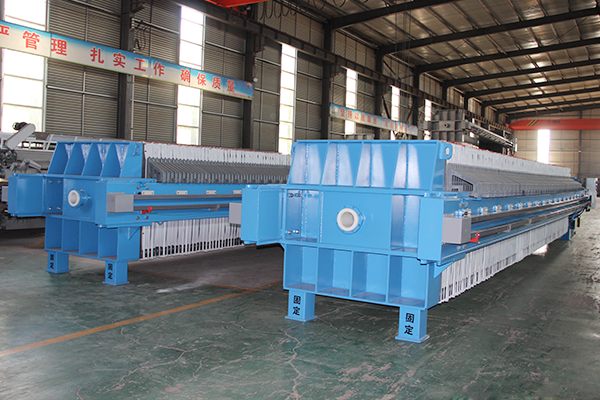
A chamber filter press is the traditional design. It consists of a series of rectangular plates covered with filter cloth. When the press is closed, adjacent plates form sealed chambers between them. Slurry is pumped into the chambers under pressure. Filtrate passes through the filter cloth and drains out, while solids remain inside the chamber as a filter cake.
Once filtration is complete, the press opens, and the filter cake drops out by gravity. Chamber presses are simple, reliable, and relatively inexpensive. They are the workhorse of many industrial filtration operations.
What Is a Membrane Filter Press?
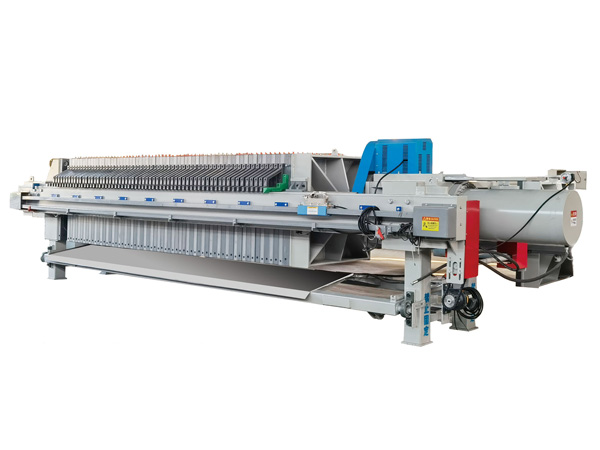
A membrane filter press (also called a diaphragm filter press) is an upgraded design. Every other plate has an inflatable rubber diaphragm on one or both sides. After the initial filtration cycle, the diaphragm is inflated with compressed air or water, squeezing the filter cake further and reducing its moisture content by 5–15%.
The squeezing step is what sets membrane presses apart. By compressing the filter cake after filtration, you get much lower moisture content — which means lower disposal costs, easier handling, and better product recovery. Membrane presses cost 20–40% more than chamber presses, but the drier filter cake often justifies the investment.
Key Differences Comparison Table
| Feature | Chamber Press | Membrane Press |
|---|---|---|
| Cake Moisture | 20–30% (typical) | 10–20% (typical) |
| Cycle Time | Shorter (no squeeze step) | Longer (adds 10–30 min) |
| Equipment Cost | Lower (baseline) | 20–40% higher |
| Operating Cost | Lower energy use | Higher (compressed air/water) |
| Cake Handling | Wetter, may be sticky | Drier, easier to handle |
| Maintenance | Simple, low cost | Diaphragm replacement needed |
When to Choose a Chamber Press
Choose a chamber filter press when:
- Cake moisture is not critical — for example, when the filter cake goes to landfill and moisture doesn't affect disposal cost much.
- You have a limited budget and need the most economical option.
- Your slurry filters easily and produces a reasonably dry filter cake with normal filtration pressure.
- You want simple, low-maintenance equipment with fewer moving parts.
When to Choose a Membrane Press
Choose a membrane filter press when:
- Cake disposal costs are high — drier filter cake means less weight to haul and landfill.
- The filter cake is a valuable product that needs to be as dry as possible for recovery or reuse.
- Downstream processes require low-moisture feedstock.
- You want to reduce transportation costs for the filter cake.
Membrane Press FAQ
- How much drier is membrane filter cake? — Typically 5–15 percentage points drier than chamber filter cake. The exact improvement depends on the slurry type and operating pressure.
- How long does the squeeze step take? — Usually 5–15 minutes. It adds to the total cycle time but is worth it for the moisture reduction.
- How long do diaphragms last? — With proper operation, rubber diaphragms last 3–5 years. They are replaceable when they eventually wear out.
- Can I upgrade a chamber press to membrane? — Some presses can be retrofitted with membrane plates, but it's often more cost-effective to buy a new membrane press. Check with the manufacturer.
- What pressure is used for squeezing? — Typically 10–16 bar, using compressed air or water. The squeeze pressure affects how dry the final filter cake is.
- Is a membrane press worth the extra cost? — It depends on your disposal costs. If you pay $50/ton for landfill and process 10 tons/day, reducing moisture by 10% saves money quickly. Calculate your specific payback.
Conclusion
Both chamber and membrane filter presses are excellent equipment choices. Chamber presses are simpler and cheaper, suitable when filter cake moisture is not critical. Membrane presses cost more upfront but produce significantly drier filter cake — saving money on disposal and transportation. Evaluate your specific application: calculate how much you spend on filter cake disposal, compare the payback period, and choose the press that gives you the best total cost of ownership over 5 years.
References
- Filters and Filtration Handbook, 5th Edition — Clifford Walters
- American Filtration & Separations Society — Membrane Press Best Practices
Writer Michael Chen
Michael Chen is a technical writer and engineer with over 12 years of experience in the filtration industry. He specializes in technical documentation, product specification and application engineering. Michael Chen holds a Bachelor's degree in Mechanical Engineering and has contributed to numerous technical publications on filtration equipment and process optimization.
 Recommended Products
 Contact us
—— Contact:Manager
—— Tel:+86 16632826789
—— Email:sales@hbscfilterpress.com
—— Url:https://www.hbscfilterpress.com
—— Address:West Zone of Economic Development Zone, Fucheng County, Hengshui City, Hebei Province