
NewsDetails
Sludge Dewatering with Filter Presses: A Complete Overview
author:grh time:2026-11-23 18:11:06 Click:0
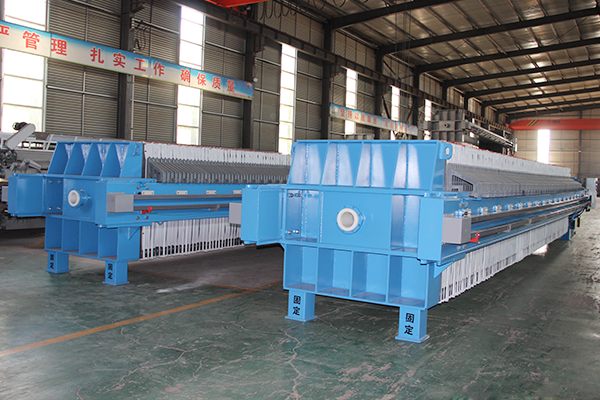
Sludge dewatering is one of the most common applications for filter presses. Whether you operate a wastewater treatment plant, a mining operation, or a food processing facility, you need to reduce the water content of your sludge before disposal. Filter presses are one of the most effective and cost-efficient dewatering technologies available. This guide explains how filter press sludge dewatering works and what you need to know to get the best results.
Why Dewater Sludge?
Sludge comes out of wastewater treatment as a watery slurry — typically 95–90% water. Pumping and disposing of this much water is expensive. Dewatering removes most of the water, reducing the sludge volume dramatically. A 90% water slurry becomes a 70–80% water filter cake after dewatering — that's a 5–10× reduction in volume. Fewer truckloads, lower disposal fees, and easier handling.
The Sludge Dewatering Process
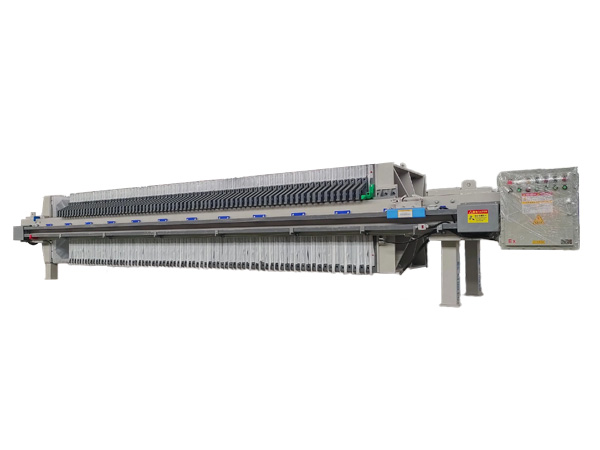
- Thickening: Sludge is first thickened in a gravity thickener or dissolved air flotation (DAF) unit. This raises solids concentration from 0.5–1% to 2–5%.
- Conditioning: Polymer or other conditioners are added to the sludge. This causes the fine particles to clump together (flocculate), making them easier to filter.
- Filtration: Conditioned sludge is pumped into the filter press. Pressure forces water through the filter cloth, leaving solids as a filter cake.
- Cake discharge: Once filtration is complete, the press opens and the dewatered filter cake drops out.
- Disposal or reuse: The filter cake goes to landfill, incineration, or beneficial reuse depending on its quality.
Sludge Conditioning: Why It Matters
Most sludges are difficult to filter directly. The particles are very fine, and the sludge has a jelly-like consistency. Conditioning with polymer flocculants changes this — the fine particles clump into larger flocs that trap water easily. Proper polymer dosing is critical: too little and filtration is slow; too much and you waste money on expensive polymer.
Polymer dosing is typically 0.1–0.5% of dry solids weight. The exact dose depends on the sludge type and must be determined by jar testing in the lab.
Dewatering Performance Comparison
| Technology | Cake Solids | Capital Cost | Operating Cost |
|---|---|---|---|
| Belt Filter Press | 15–25% | Medium | Medium |
| Centrifuge | 20–30% | High | High (energy, maintenance) |
| Chamber Filter Press | 25–35% | Medium | Low |
| Membrane Filter Press | 35–50% | Medium-High | Low-Medium |
Sludge Dewatering FAQ
- How much does dewatering save on disposal costs? — If you pay $50/ton for landfill and your sludge is 90% water, dewatering to 75% solids reduces volume by ~10×. The savings add up quickly for large operations.
- What polymer should I use? — Depends on the sludge type. Anionic polymers work well for inorganic sludges (mining, chemical). Cationic polymers are better for organic sludges (municipal wastewater, food). Run jar tests to find the best product and dose.
- How often do filter cloths need replacing? — For sludge dewatering, cloths typically last 3–6 months. The abrasive nature of sludge and regular cleaning shortens cloth life.
- Can I dewater sludge without polymer? — Some sludges filter without conditioning, but most need polymer for reasonable filtration rates. Without polymer, cycles are longer and filter cake is wetter.
- What do you do with the dewatered filter cake? — Depending on the sludge quality: landfill, incineration, composting (for organic sludges), or beneficial reuse (e.g., mining sludge as construction fill).
- How big a filter press do I need for my wastewater plant? — It depends on your sludge volume and solids concentration. Run a pilot test or work with a supplier to size the press correctly.
Conclusion
Filter presses are an excellent choice for sludge dewatering. They produce drier filter cake than belt presses or centrifuges, with lower operating costs. The key to success is proper sludge conditioning with the right polymer at the right dose. With proper operation and maintenance, a filter press will deliver reliable dewatering performance and significant cost savings on sludge disposal for many years.
References
- Wastewater Sludge Dewatering Manual — Water Environment Federation
- Filtration + Separation Magazine — Sludge Dewatering Technology Comparison
Writer John Anderson
John Anderson is a technical writer and engineer with over 12 years of experience in the filtration industry. He specializes in technical documentation, product specification and application engineering. John Anderson holds a Bachelor's degree in Mechanical Engineering and has contributed to numerous technical publications on filtration equipment and process optimization.
 Recommended Products
 Contact us
—— Contact:Manager
—— Tel:+86 16632826789
—— Email:sales@hbscfilterpress.com
—— Url:https://www.hbscfilterpress.com
—— Address:West Zone of Economic Development Zone, Fucheng County, Hengshui City, Hebei Province