
NewsDetails
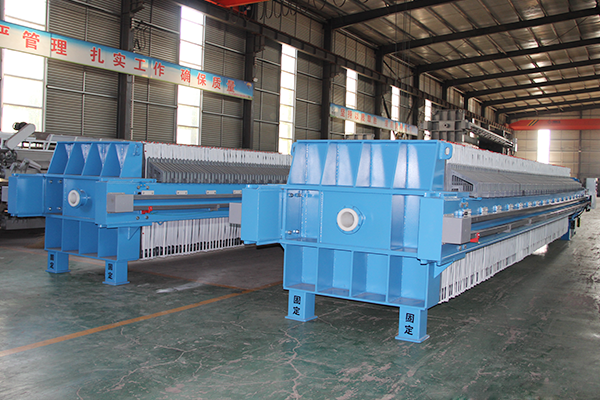
The Mechanics of Filtration Inside a Chamber Filter Press
author:Shuangcheng time:2025-12-21 10:29:58 Click:73
Understanding How a Chamber Filter Press Works
A Chamber Filter Press is a widely used solid–liquid separation system designed to handle high solids content and demanding industrial conditions. Its effectiveness lies in a carefully engineered mechanical process that applies pressure to slurry, separates solids from liquid, and produces a stable filter cake.
Understanding the internal filtration mechanics of a Chamber Filter Press is essential for operators, engineers, and production planners. Whether used in wastewater treatment, chemical processing, mining, or food-related applications, this equipment plays a critical role in maintaining stable production flow and meeting discharge or reuse requirements. For operations working directly with a manufacturer or managing bulk production supply, knowledge of filtration mechanics also supports better system selection and optimization.
1. Core Components of a Chamber Filter Press
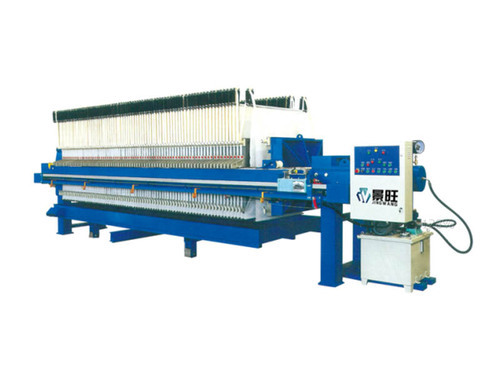
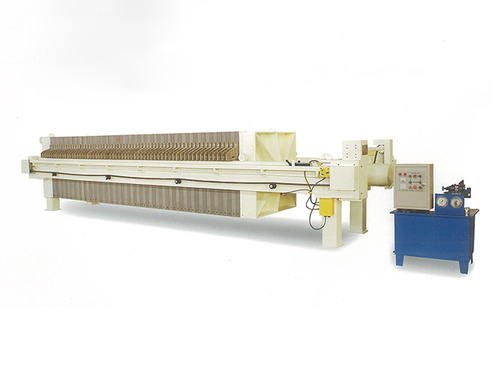
The filtration process begins with the structural design of the press.
Primary Mechanical Elements
·Filter plates forming enclosed chambers
·Filter cloths acting as separation media
·Hydraulic closing system providing sealing force
·Feed inlet channels distributing slurry
Each chamber is created when two filter plates are pressed together, forming a sealed space where filtration occurs under controlled pressure.
2. Slurry Feeding and Chamber Filling
Filtration begins when slurry is pumped into the press.
Filling Phase Mechanics
·Slurry enters through a central feed port
·Chambers fill uniformly across the plate pack
·Initial filtration starts immediately as liquid passes through the cloth
At this stage, solids begin depositing on the filter cloth surface, forming the foundation of the filter cake. Even slurry distribution is critical to avoid uneven cake thickness.
3. Pressure-Driven Filtration Process
Once chambers are filled, pressure becomes the driving force behind separation.
How Pressure Enables Filtration
·Hydraulic force maintains plate sealing
·Feed pump pressure pushes liquid through the cake
·Solids remain trapped inside the chamber
As filtration progresses, resistance increases due to cake buildup. This natural resistance slows filtrate flow, making pressure control essential for efficiency.
4. Filter Cake Formation and Consolidation
Filter cake formation is the defining mechanical process inside a Chamber Filter Press.
Cake Development Stages
1.Initial particle deposition
2.Cake thickening
3.Compression under sustained pressure
The cake acts as an additional filtration layer, improving clarity of the filtrate. In some production environments, cake squeezing or extended pressure holding is used to increase dryness.
5. Role of Filter Cloth in Separation
Filter cloth selection directly influences filtration performance.
Mechanical Functions of Filter Cloth
·Supports solid retention
·Controls filtrate flow rate
·Determines cake release behavior
Cloth permeability, material strength, and surface finish must align with slurry characteristics. In industrial production settings, standardized cloth specifications support consistent output across multiple cycles.
6. Hydraulic System and Structural Stability
The hydraulic system ensures mechanical integrity during filtration.
Key Hydraulic Functions
·Applies closing force to plate stack
·Maintains chamber sealing under pressure
·Allows controlled opening after filtration
Proper hydraulic pressure prevents leakage and plate deformation. Oversizing hydraulic force does not improve filtration speed and may increase mechanical wear.
7. Cake Discharge and Plate Opening Mechanics
After filtration is complete, the press transitions to discharge mode.
Discharge Process
·Hydraulic system releases pressure
·Plates separate sequentially
·Filter cake detaches and falls by gravity
Efficient cake release depends on cake consistency, cloth condition, and plate alignment. Automated or assisted plate shifting systems are often used in larger production environments.
8. Mechanical Factors Affecting Filtration Efficiency
Several mechanical variables influence overall system performance.
Critical Performance Factors
·Chamber depth and volume
·Filtration area
·Slurry feed pressure
·Cycle time duration
Balancing these factors improves throughput without compromising cake quality or equipment lifespan.
9. Integration into Production Systems
A Chamber Filter Press rarely operates in isolation.
System Integration Considerations
·Feed pump matching
·Filtrate handling capacity
·Cake transport systems
·Control interface compatibility
For operations involved in continuous production or bulk supply, seamless integration ensures stable output and predictable maintenance cycles.
Conclusion: Why Filtration Mechanics Matter in a Chamber Filter Press
A Chamber Filter Press relies on precise mechanical interaction between pressure, filtration media, and structural design to achieve reliable solid–liquid separation. Understanding how slurry fills chambers, how filter cake forms, and how hydraulic force maintains system stability allows operators to optimize performance and reduce downtime.
For production-focused operations and equipment manufacturers supplying chamber filter press systems at scale, mastering filtration mechanics supports consistent quality, efficient production planning, and long-term operational reliability. By aligning mechanical principles with real-world process demands, a Chamber Filter Press becomes a dependable cornerstone of industrial filtration.
References
GB/T 7714:Wakeman R, Tarleton E S. Solid/liquid separation: principles of industrial filtration[M]. Elsevier, 2005.
MLA:Wakeman, Richard, and E. Steve Tarleton. Solid/liquid separation: principles of industrial filtration. Elsevier, 2005.
APA:Wakeman, R., & Tarleton, E. S. (2005). Solid/liquid separation: principles of industrial filtration. Elsevier.
 Recommended Products
 Contact us
—— Contact:Manager
—— Tel:+86 16632826789
—— Email:sales@hbscfilterpress.com
—— Url:https://www.hbscfilterpress.com
—— Address:West Zone of Economic Development Zone, Fucheng County, Hengshui City, Hebei Province