
NewsDetails
The Role of Automation in Hydraulic Filter Press Systems
author:Shuangcheng time:2026-01-20 17:30:41 Click:152
As a professional hydraulic filter press automation manufacturer with established production capability and bulk supply capacity, we have seen firsthand how automation has transformed industrial solid–liquid separation. While traditional hydraulic filter press systems are known for their robustness and pressure stability, automation introduces a new level of precision, efficiency, and operational consistency.
In sectors such as mining, chemical processing, metallurgy, and wastewater treatment, automated hydraulic filter press systems are increasingly becoming the standard. Automation not only improves dewatering performance but also reduces labor dependency and enhances safety. This article explores the role of automation in hydraulic filter press systems and explains why manufacturer-level production expertise is critical for successful implementation.
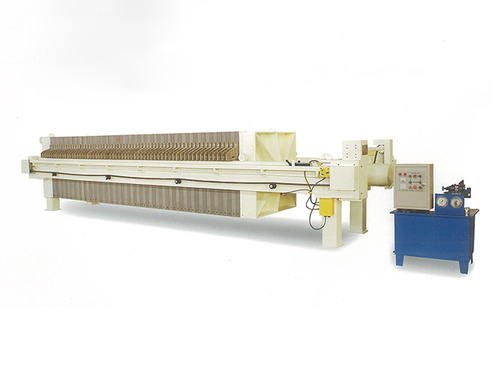
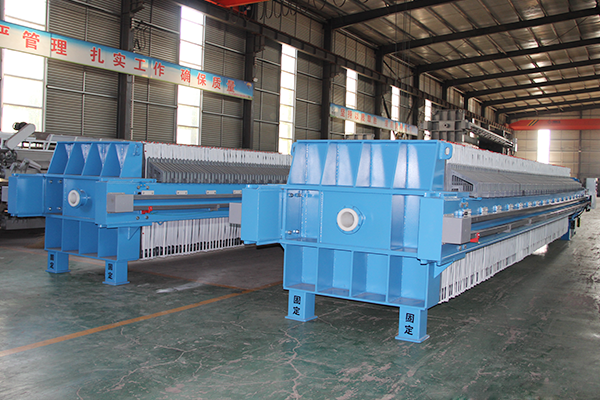
Understanding Hydraulic Filter Press Systems
A hydraulic filter press operates by using hydraulic force to tightly close filter plates, forming sealed chambers where slurry is pumped in. Solids are retained inside the chambers while liquid passes through the filter media.
Automation enhances this process by controlling plate closing, pressure regulation, filtration timing, and plate opening with high precision. When automation is integrated during the production stage, mechanical components and control systems work seamlessly together, reducing operational variability and system stress.
Why Automation Is Essential in Modern Filtration Operations
Manual operation of hydraulic filter presses can result in inconsistent cycle times, higher labor costs, and increased risk of operational errors. Automation addresses these challenges by standardizing each filtration step.
Key benefits of automation include:
·Consistent and repeatable filtration cycles
·Reduced reliance on skilled manual operators
·Improved process stability across shifts
From a production perspective, automated hydraulic filter press systems are engineered for long-term continuous operation, making them suitable for high-capacity industrial applications.
Automated Pressure Control and System Stability
Precise pressure control is a critical factor in filtration efficiency and equipment longevity. Automated hydraulic systems continuously monitor and adjust pressure based on predefined parameters.
This approach offers several advantages:
·Stable and uniform plate closing force
·Reduced risk of plate deformation or leakage
·Optimized filtration performance under varying load conditions
Manufacturers validate automated pressure systems through rigorous production testing to ensure reliability under sustained high-pressure operation.
Optimizing Cycle Time and Increasing Throughput
Automation allows hydraulic filter press systems to operate with optimized cycle timing. Sensors and control logic track filtration stages and automatically adjust transitions between filling, filtering, compression, and discharge.
As a result:
·Filtration cycles are shortened
·Downtime between batches is reduced
·Overall throughput is increased
For operators sourcing equipment from a hydraulic filter press automation manufacturer with bulk production capability, these gains directly improve plant productivity and process efficiency.
Enhancing Safety Through Automated Operation
High-pressure filtration environments present inherent safety risks. Automation significantly reduces these risks by minimizing manual intervention.
Common safety-related automation features include:
·Interlocked plate movement systems
·Emergency stop and fault protection
·Automatic alarms for abnormal conditions
By integrating safety automation during production, manufacturers ensure compliance with industrial safety standards while maintaining smooth operation.
Automation and Maintenance Efficiency
Automated hydraulic filter press systems simplify maintenance by providing real-time system feedback and diagnostics.
This enables:
·Early detection of hydraulic or mechanical issues
·Predictive maintenance planning
·Reduced unplanned downtime
Manufacturers with standardized production processes design automation-ready systems that support easy component replacement and consistent maintenance procedures across large installations.
Integration with Centralized Plant Control Systems
Modern hydraulic filter press automation often supports integration with broader plant control platforms. This allows operators to monitor and manage filtration processes remotely.
Integration benefits include:
·Centralized process monitoring
·Data-driven performance optimization
·Improved coordination with upstream and downstream systems
Production-level compatibility with industrial control architectures ensures smoother commissioning and long-term scalability.
Why Manufacturer-Level Automation Experience Matters
Not all automated hydraulic filter press systems deliver the same level of performance. Choosing equipment from a manufacturer with proven automation production expertise and bulk supply capability ensures consistency, reliability, and long-term support.
Key manufacturer-level advantages include:
·Standardized automation design across product lines
·Consistent quality control throughout production batches
·Technical support for large-scale or multi-site deployments
These factors are especially important for industrial operations planning future expansion or repeated equipment procurement.
Conclusion
Understanding the role of automation in hydraulic filter press systems highlights how intelligent control transforms traditional filtration into a safer, more efficient, and more reliable process. From precise pressure regulation and optimized cycle timing to enhanced safety and maintenance efficiency, automation delivers measurable operational value.
As a hydraulic filter press automation manufacturer with scalable production and bulk supply capabilities, focusing on integrated system design, controlled manufacturing processes, and long-term reliability ensures automated filter press systems meet the demanding requirements of modern industrial environments. Investing in automation is a strategic step toward sustainable efficiency and operational excellence.
References
GB/T 7714:Rushton A, Ward A S, Holdich R G. Solid-liquid filtration and separation technology[M]. John Wiley & Sons, 2008.
MLA:Rushton, Albert, Anthony S. Ward, and Richard G. Holdich. Solid-liquid filtration and separation technology. John Wiley & Sons, 2008.
APA:Rushton, A., Ward, A. S., & Holdich, R. G. (2008). Solid-liquid filtration and separation technology. John Wiley & Sons.
 Recommended Products
 Contact us
—— Contact:Manager
—— Tel:+86 16632826789
—— Email:sales@hbscfilterpress.com
—— Url:https://www.hbscfilterpress.com
—— Address:West Zone of Economic Development Zone, Fucheng County, Hengshui City, Hebei Province